Pipette tips are essential laboratory consumables used in scientific research, diagnostics and industrial laboratories. Whether you work in molecular biology, chemistry or a clinical testing, the right choice of pipette tips is important to ensure high accuracy, experiment reproducibility and results free of contamination.
In this comprehensive guide from Pipette.com, we’ll cover everything you need to know about pipette tips - from the materials and packaging formats to the different types of tips and their applications.
From this guide, you will learn:
- What are pipette tips and what is their role in the lab
- What are the common materials, volumes and packaging options
- What are levels of sterility for contamination control
- What are the key pipette tip types and their applications
- How to choose the right pipette tips
What Are Pipette Tips?
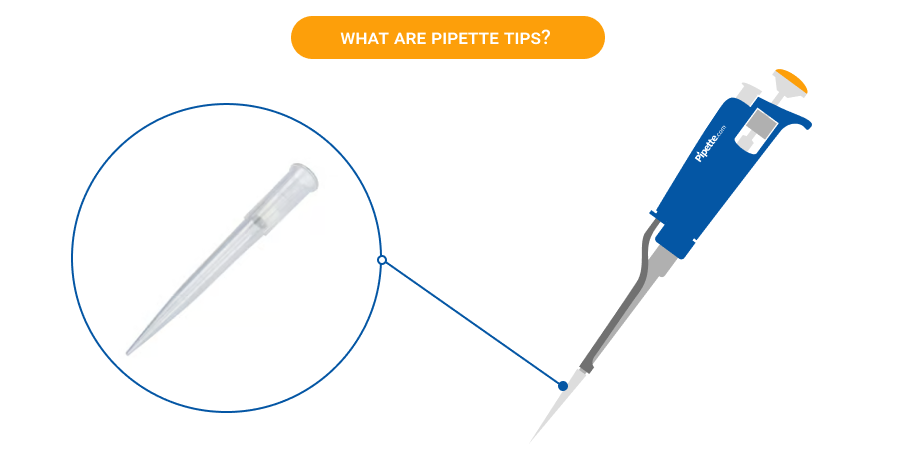
Pipette tips are a disposable plastic attachment used with micropipettes to transfer precise volumes of liquid. In history of pipetting, interchangeable disposable tips have been introduced in the 1950's and became standard in today's molecular biology tools. Designed to be accurate and precise, they help to prevent potential contamination and assure sample integrity.
 Pipette tips are used widely across many laboratories and applications, including (but not limited to):
- Molecular biology laboratories
- Clinical diagnostics and PCR
- Pharmaceutical research
- Food and environmental microbiology testing
- Academic research labs
Materials Used in Pipette Tips
Most pipette tips are manufactured from virgin polypropylene (PP), a chemically resistant and inert plastic that ensures compatibility with a wide range of reagents. Polypropylene is also the lowest-density commodity plastic (0.895–0.93 g/cm³), which is part of why tips feel so light yet remain mechanically rigid enough to maintain an airtight seal on the pipette cone.
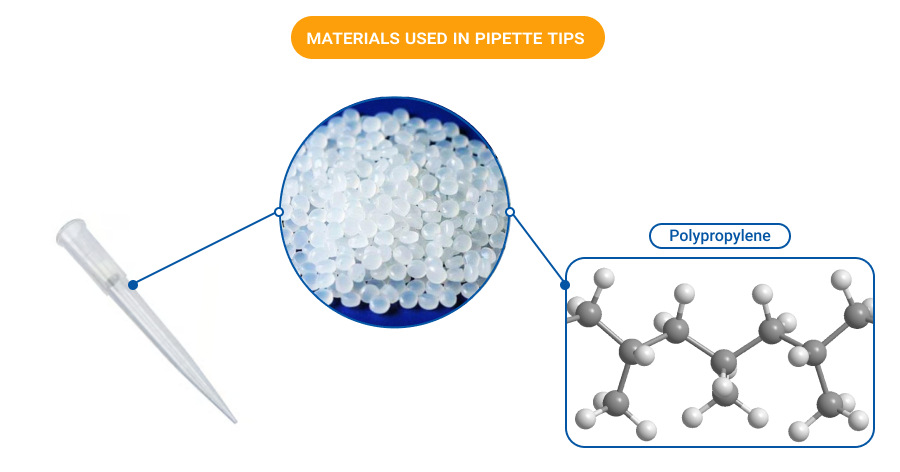
Key Material Properties:
- High chemical resistance - chemically resistant to most acids, bases, alcohols and organic solvents commonly encountered on the bench
- Low binding surface (depending on treatment) - naturally hydrophobic, meaning liquids don't cling to its surface
- Autoclavable - a melting point of approximately 130-160°C gives it a comfortable margin above conditions of a standard autoclave cycle
- Free from plasticizers and additives - "virgin" means the polypropylene resin has never been previously processed or recycled, which matters in a laboratory context because recycled or reprocessed polypropylene can carry trace contaminants
Some specialized tips include:
- Low-retention surfaces for viscous liquids
- Conductive materials for automated liquid handling systems
Pipette Tip Volumes
Pipette tips are available in various volume ranges to match different micropipettes:
- 0.1–10 µL or ultra-low volume tips
- 2–20 µL or small volume tips
- 20–200 µL or standard tips
- 100–1000 µL or large volume tips
- 1–10 mL or macro tips
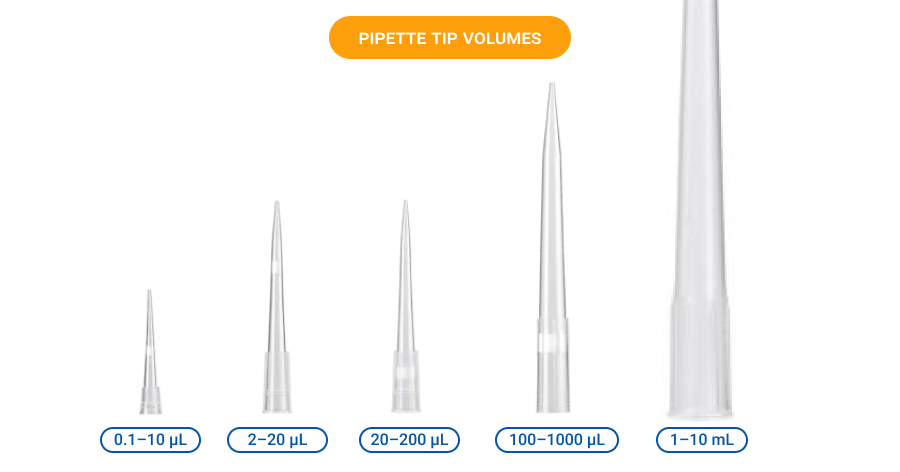
The most accurate pipetting happens when you're working in the upper half of a tip's volume range - a tip size where your target volume falls between about 35% and 100% of the tip's maximum capacity. Choosing the correct volume range improves accuracy and reproducibility, especially in quantitative assays where even a 2–3% volume error can compound across dilution series or standard curves.
Packaging Formats
Pipette tips are supplied in different packaging configurations depending on laboratory needs. Racked tips are the most common format in most laboratories - tips come pre-loaded in a molded polypropylene rack, standing upright and ready to mount. However, each rack adds material that gets discarded once the tips are used. Reload or refill systems address that waste problem - these are insert trays or stacked wafers of pre-loaded tips that slide into an existing rack box, so you reuse the outer rack and only replace the tip-holding insert. Bulk or bag-packed tips are the most economical option. Tips are shipped loose in resealable polyethylene bags - no rack, no insert.
Racked Pipette Tips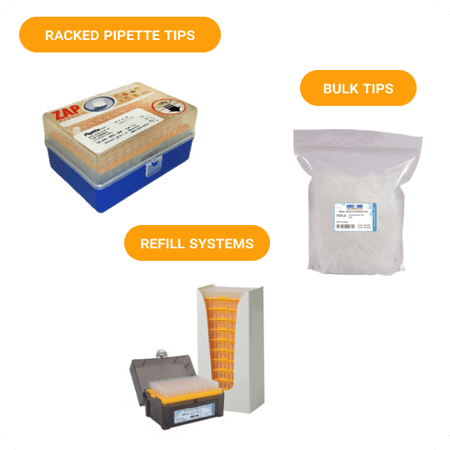
- Pre-loaded into racks
- Ready to mount and contamination-free
- Ideal for clean environments and regulated labs
Bulk (Bagged) Tips
- Loose tips in plastic bags
- Cost-effective for high-throughput labs
- Require manual loading into racks
Refill Systems (Refill Towers)
- Eco-friendly alternative
- Reduce plastic waste
- Compatible with reusable racks
Sterility and Purity
Pipette tips are available in different purity grades:
- Non-sterile tips – the standard purity for general lab work, molded in a clean production environment
- Sterile tips – subjected to a validated sterilization process (most commonly gamma irradiation) and certified to a sterility assurance level (SAL) of 10⁻⁶ (meaning the probability of a single viable microorganism surviving on any given tip is less than one in a million)
- Filtered tips – contains a physical contamination barrier that allows air to pass through for normal pipette function but blocks aerosols, liquids and particulate matter from reaching the pipette barrel
- Certified DNase/RNase-free tips - the standard molecular biology tier, these tips are manufactured under controlled conditions and each production lot is tested and certified to be free of detectable DNase, RNase and endotoxins (pyrogens)
- PCR clean / DNA-free tips
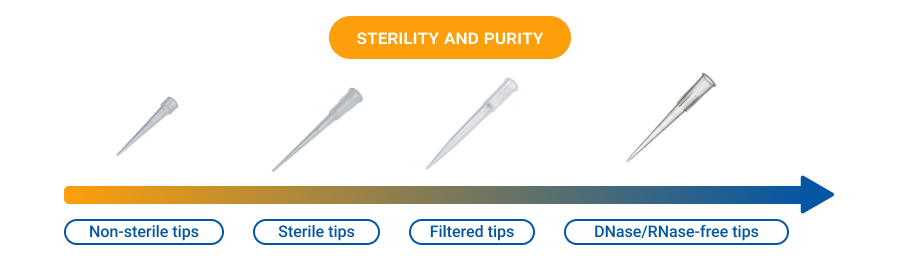
While non-sterile tips suitable for general chemistry, routine dilutions, reagent dispensing and any work where biological contamination isn't a concern, sterile and filtered pipette tips are essential for sensitive applications such as PCR, cell culture and microbiology. DNase/RNase-free certification matters for PCR, RT-qPCR, RNA extraction, cell culture and any nucleic acid or endotoxin-sensitive workflow where even trace enzymatic contamination could degrade your sample or skew results.
Types of Pipette Tips
Below are the most common types of pipette tips, including their characteristics and applications in modern laboratories.
Universal Pipette Tips
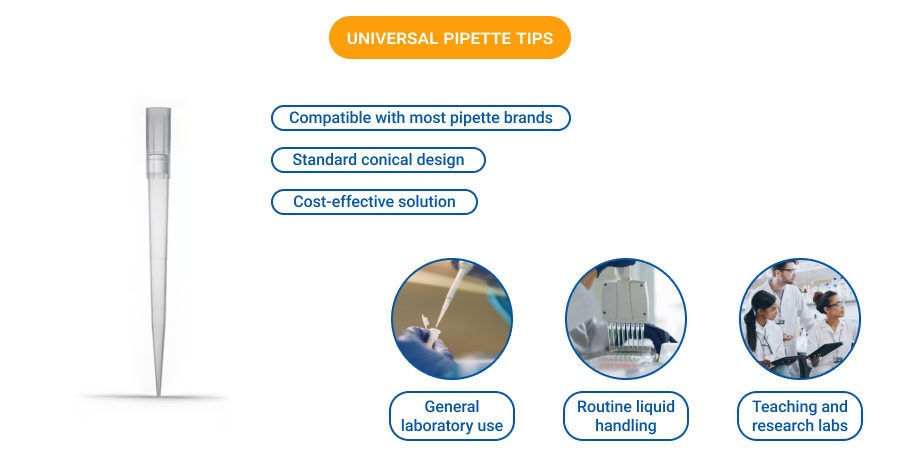
Universal pipette tips are designed to fit the widest range of pipette brands and models, making them the most commonly used laboratory consumables. Their cone geometry is engineered to create a reliable air-tight seal on pipettes from manufacturers like Gilson, Eppendorf, Rainin, Thermo Fisher and others without requiring a proprietary connection. For most laboratories using pipettes from multiple manufacturers (or labs that don't want to be locked into a single-brand ecosystem) universal tips offer the most flexibility and the simplest purchasing process.
Characteristics:
- Compatible with most pipette brands
- Standard conical design
- Cost-effective solution
Applications:
- General laboratory use
- Routine liquid handling
- Teaching and research labs
Filtered Pipette Tips
Filtered pipette tips are designed with an integrated aerosol barrier to protect samples and pipettes from contamination. The pipette tip contains a hydrophobic polyethylene or polypropylene filter plug embedded inside the upper portion of the tip, typically with a pore size of around 10-40 µm. Filtered tips are considered standard practice for PCR and qPCR, infectious sample handling, radioactive work and any protocol where cross-contamination between samples or contamination of the pipette itself must be eliminated.
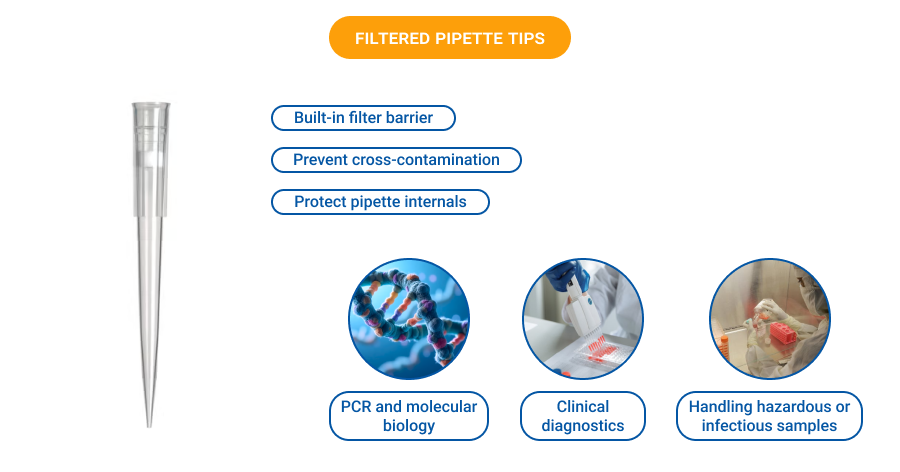
Characteristics:
- Built-in filter barrier
- Prevent cross-contamination
- Protect pipette internals
Applications:
- PCR and molecular biology
- Clinical diagnostics
- Handling hazardous or infectious samples
LTS™ LiteTouch™ Compatible Tips
LTS compatible pipette tips are tips engineered to fit LTS pipettes, which use a different mounting mechanism than traditional cone-based pipettes. Instead of relying on friction between a conical pipette shaft and the inside of the tip, LTS pipettes use a cylindrical collar with an O-ring-like seal that requires significantly less insertion force to mount and less ejection force to release.
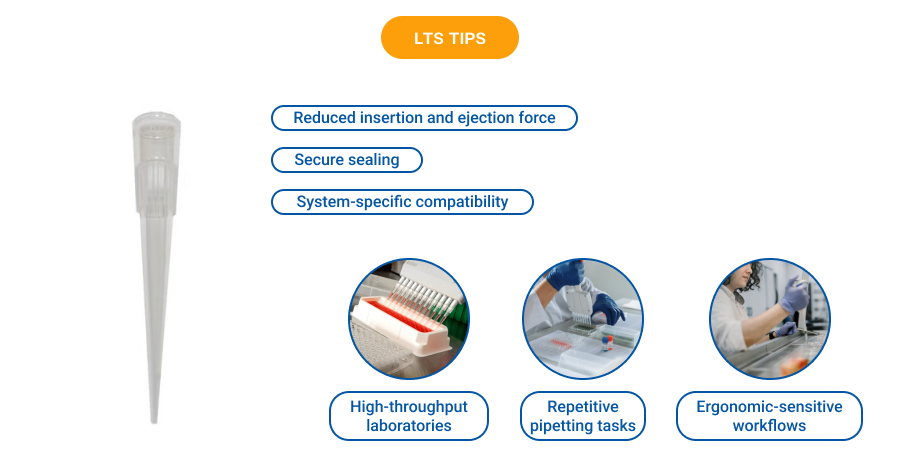 Characteristics:
- Reduced insertion and ejection force
- Secure sealing
- System-specific compatibility
Applications:
- High-throughput laboratories
- Repetitive pipetting tasks
- Ergonomic-sensitive workflows
Low Retention Pipette Tips
Low retention pipette tips feature a specially treated inner surface that reduces the tendency of liquids to cling to the tip wall, usually through fluorination, plasma coating or other proprietary hydrophobic treatments. Standard polypropylene is already fairly hydrophobic, but low-retention treatments take this further, which is especially noticeable when pipetting viscous solutions, protein-rich samples, detergent-containing buffers or precious reagents where maximizing sample recovery is important.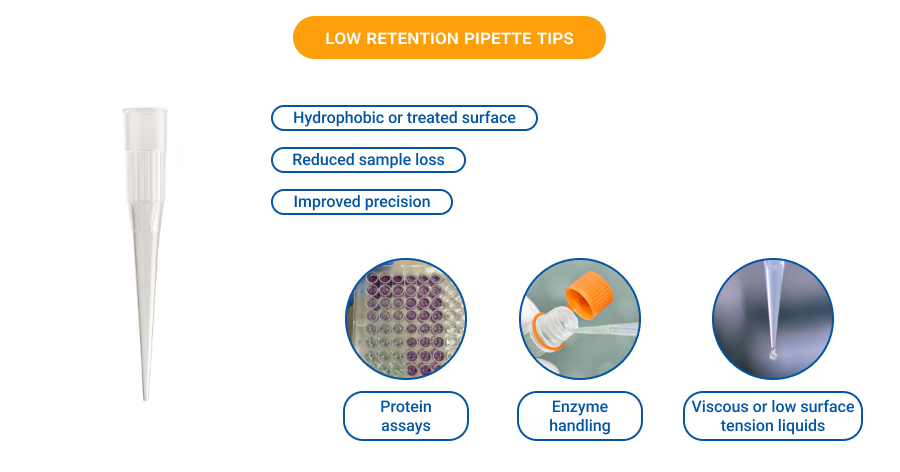 Characteristics:
- Hydrophobic or treated surface
- Reduced sample loss
- Improved precision
Applications:
- Protein assays
- Enzyme handling
- Viscous or low surface tension liquids
Wide Bore Pipette Tips
Wide bore pipette tips have a larger-diameter orifice than standard tips of the same volume range. The wider opening reduces shear stress on the sample as it's aspirated and dispensed, which is critical when working with shear-sensitive materials like resuspended cells, primary cell suspensions, genomic DNA, viscous lysates or bead-based assay suspensions.
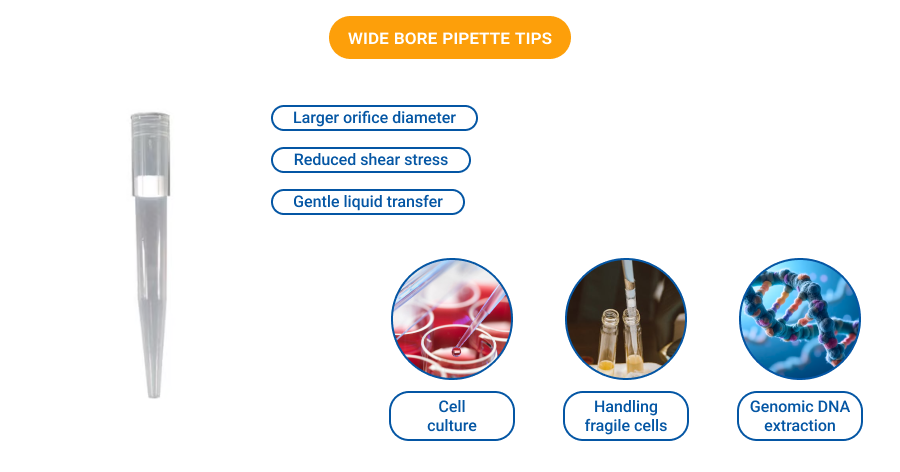 Characteristics:
- Larger orifice diameter
- Reduced shear stress
- Gentle liquid transfer
Applications:
- Cell culture
- Handling fragile cells
- Genomic DNA extraction
Gel Loading Tips
Gel loading pipette tips are extremely thin, elongated tips designed to reach into the narrow wells of polyacrylamide or agarose electrophoresis gels. They are typically flat or round at the end and have a very fine diameter that fits between the glass plates of a vertical gel cassette or into the small wells of a horizontal gel. Gel-loading tips are usually available in small volume ranges (up to about 10-20 µL) matching the typical sample volumes loaded onto gels.
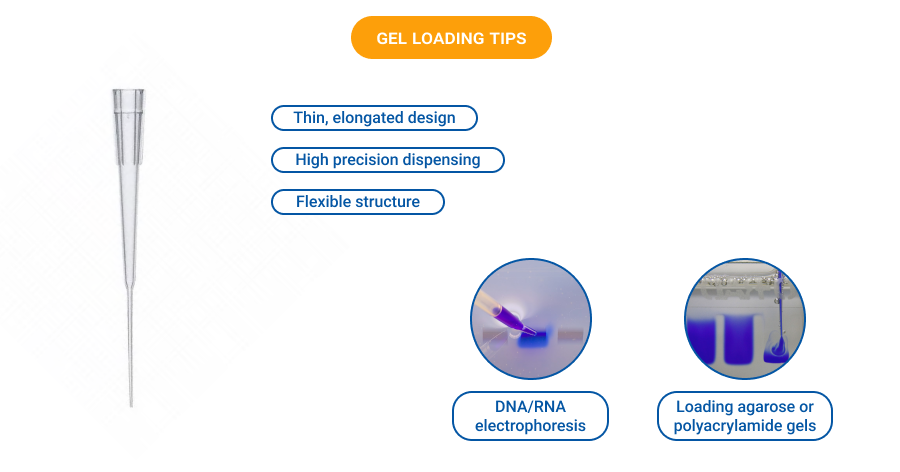 Characteristics:
- Thin, elongated design
- High precision dispensing
- Flexible structure
Applications:
- DNA/RNA electrophoresis
- Loading agarose or polyacrylamide gels
Extra Long Pipette Tips
Extra long pipette tips extend the reach of a standard pipette, allowing access to the bottom of deep vessels like 15 mL and 50 mL centrifuge tubes, deep-well microplates, narrow-neck flasks, and tall reagent bottles. Extra-long tips maintain a safe distance between the instrument and the sample while still reaching the full depth of the vessel. They're also useful for aspirating the last volume from a container without tilting it.
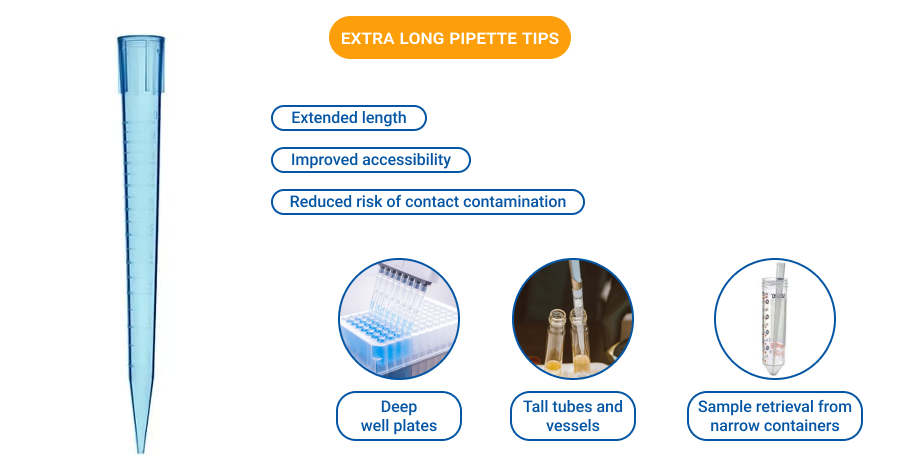
Characteristics:
- Extended length
- Improved accessibility
- Reduced risk of contact contamination
Applications:
- Deep well plates
- Tall tubes and vessels
- Sample retrieval from narrow containers
Robotics-Compatible Pipette Tips
Robotics-compatible pipette tips are precision-manufactured to tighter dimensional tolerances than standard tips, because automated liquid handling platforms depend on exact, repeatable tip geometry for consistent mounting, sealing, and ejection. Even small variations in tip dimensions that a human operator would compensate for unconsciously, like a slightly loose fit or a tip that seats at a slight angle, can cause errors or jams on a robotic system. Robotics tips are typically supplied in SBS-format racks (matching the standard 96- or 384-well microplate footprint) and are designed for automated tip pickup and disposal.
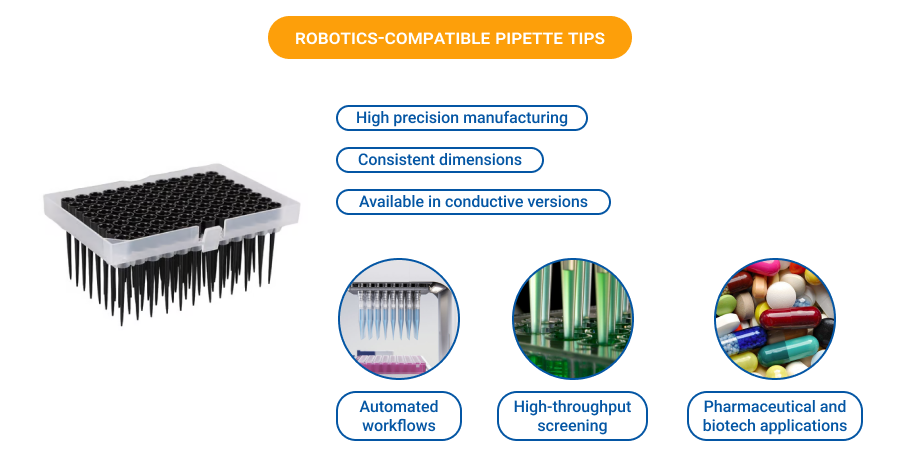 Characteristics:
- High precision manufacturing
- Consistent dimensions
- Available in conductive versions
Applications:
- Automated workflows
- High-throughput screening
- Pharmaceutical and biotech applications
Combitip/Dispenser Tips for Repeater Pipettes
Repeater pipette tips are used with repeater pipettes (also called stepper or positive-displacement dispensing pipettes) that dispense a set volume multiple times from a single aspiration. Unlike standard tips, repeater tips are essentially miniature syringes and contain an internal piston that moves within a cylindrical barrel. The user aspirates a large volume once and then dispenses it in equal, pre-set aliquots with each click of the dispenser mechanism. Combitips are volume-specific and are typically sold by the pipette manufacturer (such as Eppendorf Combitips).
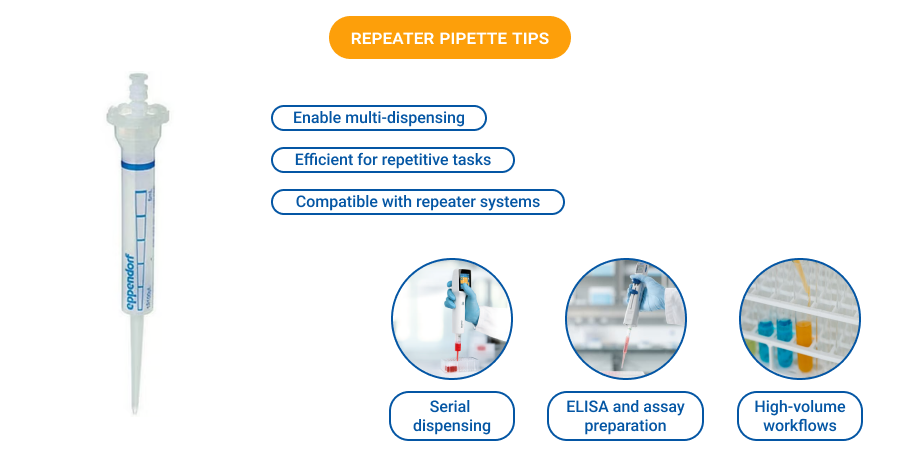 Characteristics:
- Enable multi-dispensing
- Efficient for repetitive tasks
- Compatible with repeater systems
Applications:
- Serial dispensing
- ELISA and assay preparation
- High-volume workflows
Positive Displacement Tips
Positive displacement pipette tips work on a fundamentally different principle from standard air-displacement tips. In a standard tip, a cushion of air sits between the pipette's piston and the liquid, where any change in air compressibility (due to temperature, altitude or vapor pressure) can affect accuracy. Positive-displacement tips eliminate that air gap entirely: a disposable capillary-piston assembly makes direct physical contact with the liquid, so the piston pushes and pulls the sample without any air interface.
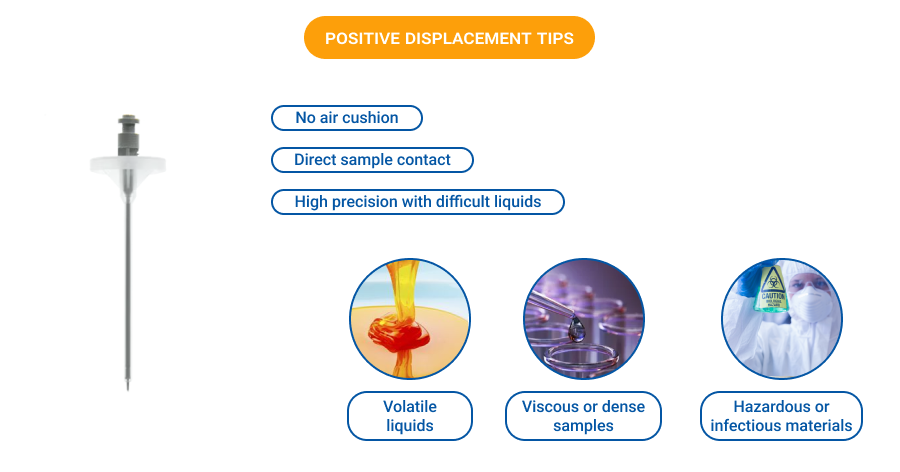 Characteristics:
- No air cushion
- Direct sample contact
- High precision with difficult liquids
Applications:
- Volatile liquids
- Viscous or dense samples
- Hazardous or infectious materials
Additional Pipette Tip Types
Additional pipette tips include specialized designs tailored for niche laboratory applications and workflows.
- Graduated tips allow visual volume estimation
- Colored tips enable easy volume identification
- Conductive tips used in automated systems
- Individually wrapped sterile tips for critical environments
Comparison Table of Pipette Tip Types
| Tip Type | Key Feature | Best For | Compatibility | Link |
| Universal Tips | Standard design | General lab work | Most pipettes | SHOP NOW |
| Filtered Tips | Aerosol barrier | PCR, diagnostics | Most pipettes | SHOP NOW |
| LTS Tips | Low force fit | Ergonomic workflows | LTS pipettes only | SHOP NOW |
| Low Retention Tips | Hydrophobic surface | Viscous liquids | Most pipettes | SHOP NOW |
| Wide Bore Tips | Large opening | Cells, DNA | Most pipettes | SHOP NOW |
| Gel Loading Tips | Long, thin | Electrophoresis | Compatible pipettes | SHOP NOW |
| Extra Long Tips | Extended reach | Deep vessels | Most pipettes | SHOP NOW |
| Robotics Tips | Automation-ready | High-throughput labs | Robotic systems | SHOP NOW |
| Repeater Tips | Multi-dispensing | Serial pipetting | Repeater pipettes | SHOP NOW |
| Positive Displacement Tips | Direct piston contact | Volatile/viscous liquids | Specialized pipettes | SHOP NOW |
How to Choose the Right Pipette Tips
When selecting pipette tips, consider:
- Volume range - pipetting accuracy and precision both improve when your working volume falls in the upper portion of the tip's range
- Compatibility with pipette brand - if you're using LTS pipettes, you'll need LTS-specific tips. For automated platforms, always use tips validated for your specific robotic system, as dimensional tolerances matter far more on a machine than they do in a human hand
- Sterility requirements - cell culture and clinical work requires sterile tips, but there's no need to spend more on sterile filtered low-retention tips when you're dispensing buffer into a flask
- Sample type (aqueous, viscous, volatile) - not all liquids behave the same way inside a pipette tip, with viscous samples like glycerol are slow to aspirate and may not fully release from a standard tip, making low-retention tips and slow pipetting technique essential
- Application (PCR, cell culture, automation) - molecular biology workflows involving PCR, qPCR, or RNA extraction call for DNase/RNase-free certified tips at minimum, with filtered tips strongly recommended to prevent aerosol carryover
- Practical workflow - if your protocol involves dispensing the same volume into 96 wells, a repeater pipette with combitips will save significant time and reduce repetitive strain compared to pipetting each well individually
Choosing the right pipette tips improves:
- Accuracy
- Reproducibility
- Workflow efficiency
- Contamination control
.png?width=206&height=350&name=200%20%CE%BCL%20Universal%20Fit%20Tips%2c%20Sterile%2c%20Low%20Retention%2c%20Graduated%2c%20Filtered%2c%20Racked%20(96%20tips%20x%2010%20racks%20x%205%20packs).png) |
.png?width=206&height=350&name=epT.I.P.S.%C2%AE%20Reloads%20Tips%2c%2020%20%E2%80%93%20300%20%CE%BCL%2c%2055%20mm%2c%20960%20tips%20(10%20trays%20%C3%97%2096%20tips).png) |
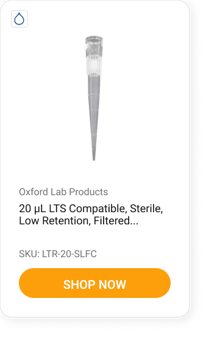 |
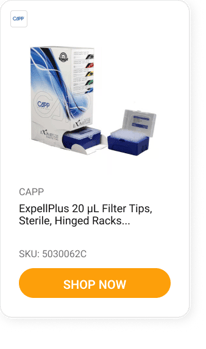 |
Final Thoughts
Pipette tips are more than simple laboratory consumables. Every time you aspirate and dispense, the tip is the only thing standing between your pipette and your sample; the choices you make about material, fit, volume range, sterility and any of the special features all feed into whether that transfer is accurate, contamination-free and gentle enough for the sample at hand. It's worth stepping back periodically to evaluate whether your current tip choices still align with how your lab actually works.
Workflows evolve as new assays get added, new instruments arrive and become common used, throughput increases and sustainability targets tighten. A reload system that wasn't worth considering when your lab used 500 tips a week might make a real difference at 5,000 and more. A low-retention tip that seemed like an unnecessary expense might pay for itself the first time it prevents sample loss in a precious single-patient clinical assay.
At Pipette.com, you can find a comprehensive selection of high-quality pipette tips for every application: from standard laboratory use to advanced molecular biology and automated workflows. Selecting the right tip doesn't have to be complicated, and if you’re unsure which pipette tips are right for your needs, our team of experts is always ready to help you choose the best solution for your laboratory.
You might be also interested in:
 |
 |
 |
| New Oxford LTR Pipette Tips Offer High Precision and Value | Understanding Proper Pipetting Techniques | LiteTouch System Success – Ergonomic Pipetting Evolution |
Frequently Asked Questions (FAQ)
What are pipette tips used for?
Pipette tips are disposable laboratory consumables used with micropipettes to accurately transfer small volumes of liquid. They help ensure precision, prevent contamination, and maintain sample integrity in scientific experiments.
What materials are pipette tips made from?
Most pipette tips are made from high-quality virgin polypropylene (PP), which is chemically resistant, autoclavable, and free from contaminants that could interfere with sensitive laboratory applications.
What is the difference between filtered and non-filtered pipette tips?
Filtered pipette tips contain an aerosol barrier that prevents contamination from entering the pipette shaft and protects samples from cross-contamination. Non-filtered tips are suitable for general laboratory use where contamination risk is low.
When should I use sterile pipette tips?
Sterile pipette tips should be used in applications where contamination must be avoided, such as PCR, cell culture, microbiology, and clinical diagnostics.
What are low retention pipette tips?
Low retention pipette tips are specially treated to reduce liquid adhesion, ensuring maximum sample recovery. They are ideal for handling viscous liquids, proteins, enzymes, and other sensitive samples.
Are universal pipette tips compatible with all pipettes?
Universal pipette tips are designed to fit most standard pipettes, but compatibility can vary depending on the brand and model. For optimal performance, always verify compatibility with your specific pipette.
What are wide bore pipette tips used for?
Wide bore pipette tips are used for handling delicate samples such as cells or large DNA fragments. Their larger opening reduces shear stress and prevents sample damage.
What are positive displacement pipette tips?
Positive displacement pipette tips use a built-in piston system that eliminates the air cushion found in standard pipetting. This makes them ideal for viscous, volatile, or hazardous liquids requiring high accuracy.
What packaging options are available for pipette tips?
Pipette tips are available in racks (pre-loaded and sterile), bulk bags (cost-effective for high-volume use), and refill systems (eco-friendly options that reduce plastic waste).
How do I choose the right pipette tips for my application?
To choose the right pipette tips, consider volume range, compatibility with your pipette, sterility requirements, sample type, and application. Using the correct tip improves accuracy, reduces contamination, and enhances workflow efficiency.
Rainin is a registered trademark of Mettler-Toledo International Inc.