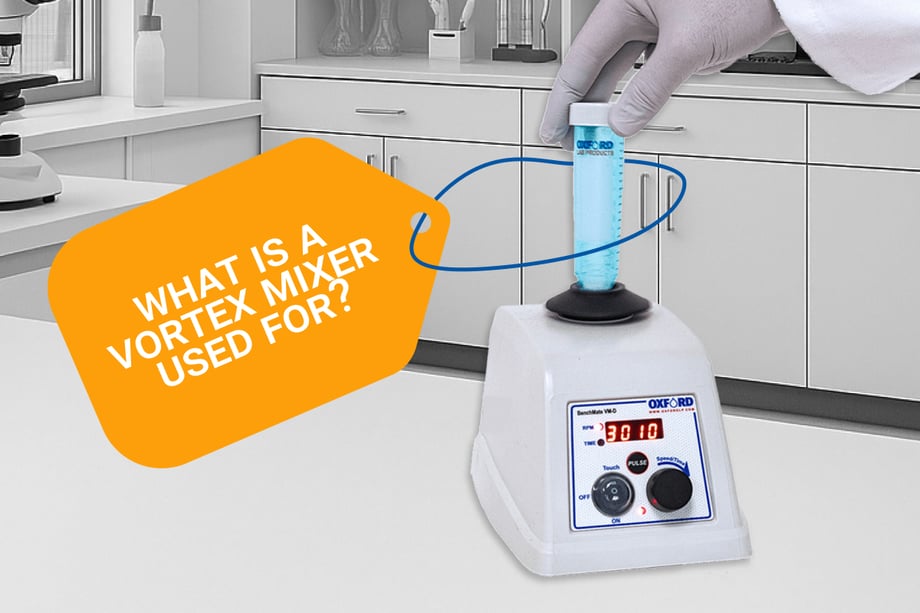
Vortex mixers are compact benchtop tools that quickly blend small liquid volumes by creating a whirlpool inside tubes. This guide covers how they work (touch vs. continuous), common uses, how they differ from shakers, key types (analog/digital, single/multi-tube), and safe operating tips.


This blog covers:
-
what a vortex mixer is;
-
how it compares to other mixing tools;
-
and where it fits into everyday lab work.
You’ll learn about the different types of vortex mixers, when to use vortex mixing, how to choose the one most suitable for your lab needs, and how to operate a vortex mixer safely and effectively.
What is a Vortex Mixer?
A vortex mixer is a compact benchtop device used to mix small volumes of liquid in laboratory containers such as test tubes, microtubes, and vials.
How it works:
It operates using a simple mechanical principle: when a tube is pressed against the rubber mixing cup or pad on top of the unit, a motor underneath rotates the pad in a rapid circular motion. This motion creates a vortex, or whirlpool effect, inside the liquid, effectively blending its contents.

Most vortex mixers are designed for ease of use and quick operation. They typically feature either a touch mode (activated by pressing the tube down) or a continuous mode (which keeps the motor running until switched off). Speeds may be fixed or adjustable, depending on the model.
While small in size, a vortex mixer is a practical tool for quickly suspending cells, mixing reagents, or dissolving solids in liquid, making it a routine part of many laboratory workflows.
What Is a Vortex Mixer Used for in Laboratories?
What is vortexing in a lab? This is when vortex mixers are used across various lab disciplines to mix, resuspend, and homogenize small liquid samples.
- In biology labs, they’re often used to suspend cells or mix reagents in test tubes
- In chemistry settings, vortex mixers help dissolve solids or blend multiple solutions quickly
- Clinical labs rely on them for preparing samples, reagents, or diagnostic solutions
Because they are quick, compact and reduce manual effort, vortexing in a lab is especially valuable for high-throughput environments and routine prep work.
Vortex mixers typically operate at speeds between 100 RPM and 3,200 RPM, making them well-suited for mixing small-volume samples in tubes.
What Is the Difference Between a Vortex Mixer and a Shaker?
While both vortex mixers and shakers are used to mix liquids in laboratories, they serve different purposes and operate in distinct ways.
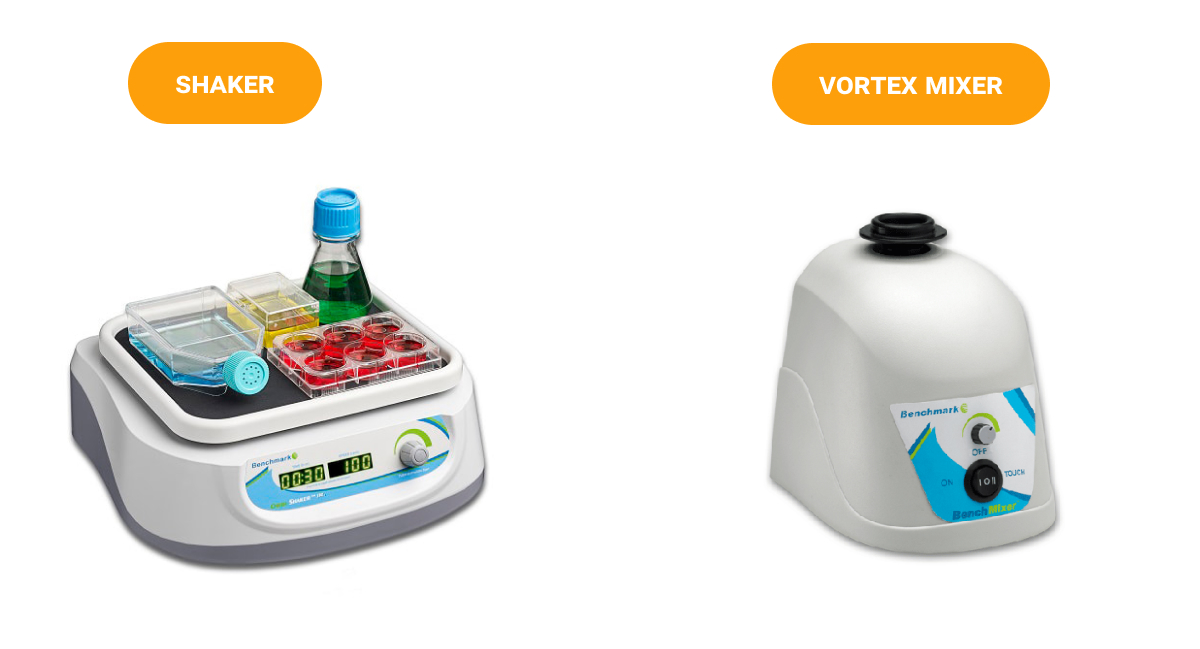
A shaker is a device designed to gently agitate larger volumes of liquid over an extended period. It typically features a flat platform that holds multiple containers, such as beakers, flasks, or well plates, and moves them in a consistent pattern (orbital, linear, or reciprocal).
Shakers are ideal for mixing cell cultures, dissolving solutes in bulk solutions, or evenly distributing reagents across multiple samples. Some shakers like MultiTherm Touch offer heating blocks to meet DNA denaturation applications.
In contrast, a vortex mixer is used for fast, high-speed mixing of small individual samples, usually in test tubes or microcentrifuge tubes. Rather than shaking a platform, it mixes by creating a localized vortex within each container.
Key differences include:
- Sample volume: Vortex mixers are for small-scale mixing; shakers handle larger volumes or multiple samples at once.
- Motion type: Vortex mixers create a rapid circular motion in one container; shakers move an entire platform.
- Use case: Vortex mixers are best for quick, direct mixing. Shakers are preferred for uniform agitation over time.
Both tools are useful, but selecting the right one depends on the sample type, volume, and application.
You might be also interested in


Types of Vortex Mixers
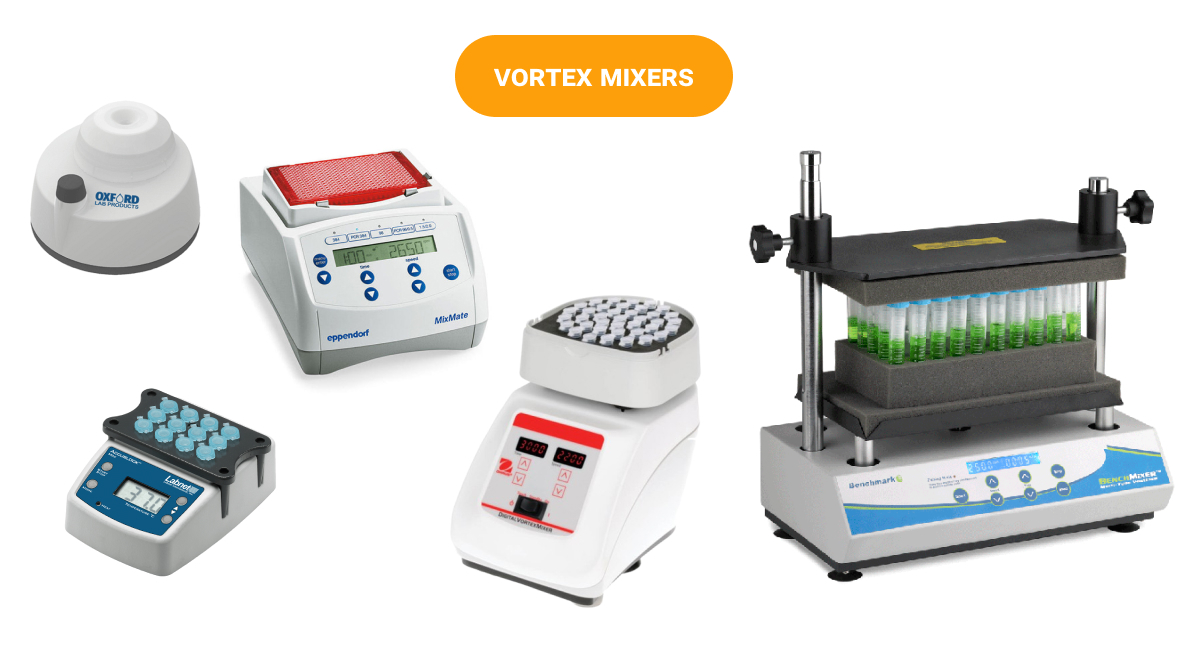
Vortex mixers come in several types, each suited to different lab settings and workflows. While all models share the same basic vortexer functions, creating a vortex for mixing liquids, their features and configurations can vary.

1. Analog vs. Digital Vortex Mixers
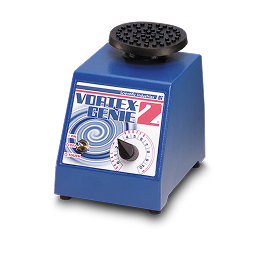
- Analog models use manual dials to adjust speed and operation. They are simple, cost-effective, and commonly used in routine lab work. For example: BenchMate Mini Vortex Mixer, BenchMixer V2 Vortex Mixer, Genie 2 Vortex Mixer, Greiner Bio-One Vortex Mixer
- Digital models offer more precise control with digital displays, programmable timers, and speed settings. These are preferred in labs that require repeatable, documented results. For example: Oxford LP BenchMate Digital Vortex Mixer, OHAUS Heavy-Duty Vortex Mixer
2. Single-Tube vs. Multi-Tube Mixers
- Single-tube vortexers are compact units designed to mix one tube at a time, making them ideal for quick, individual sample prep. For example: CAPP Rondo Mini Vortex, Oxford LP BenchMate Digital Vortex Mixer, Vornado miniature vortex mixer
- Multi-tube vortexers feature attachments or racks that hold multiple tubes simultaneously. These are useful in high-throughput labs where many samples need to be processed at once. For example: Labnet Orbit™ 300 Multipurpose Shaker, Oxford Lab Products Multi Tube Vortex Mixer, BenchMixer XL Multi-Tube Vortexer
3. Touch vs. Continuous Operation
- Touch mode activates the mixer only when a tube is pressed onto the mixing pad
- Continuous mode keeps the unit running until it is manually turned off, which is ideal for repetitive or longer mixing tasks
Some models also come with interchangeable heads or adapters to accommodate various tube sizes or microplates, adding flexibility to the device. Choosing the right type depends on how often it’s used, the sample volume, and the level of control required.
Our Featured Vortex Mixers
 |
 |
 |
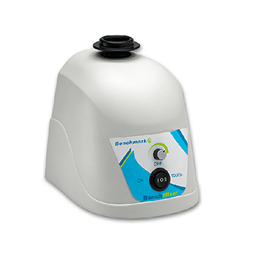 |
| Genie 2 Vortex Mixer | BenchMate Mini Vortex Mixer | Oxford LP BenchMate Digital Vortex Mixer | BenchMixer Vortexer |
Vortexing In a Lab: A Step-by-Step Guide
Using a vortex mixer is straightforward, but following the correct steps ensures safe operation and reliable results. Below is a general step-by-step guide for typical use in a lab setting:

1. Prepare your sample
Make sure your liquid is securely contained in an appropriate vessel, such as a test tube, microcentrifuge tube, or small vial. The container should be capped or covered if splashing is a concern.
2. Set up the mixer
Place the vortex mixer on a flat, stable surface. Ensure the power cord is properly connected and that the surrounding area is clear of clutter or spills.
3. Select the mixing mode
Choose between touch mode (activates when you press the tube down) or continuous mode (runs until manually stopped). If your unit has variable speed settings, adjust the speed to match your sample’s needs. Start at a lower speed and increase gradually if needed.
4. Position the tube
Hold the tube vertically and gently press the bottom against the center of the rubber mixing pad. You’ll see the liquid form a visible vortex as it spins rapidly.
5. Monitor mixing time
Mix for the length of time your SOP requires, or until the solution is properly mixed; this is usually no more than a few seconds.
6. Remove and inspect
Carefully lift the tube from the pad and check that your contents are evenly mixed. If needed, repeat the process.
* Additional Step
After vortexing, briefly centrifuge the tube (quick spin, ~5–10 s at ~5,000 × g) to collect liquid from the lid and walls before opening or proceeding.
Vortex Mixers: The Final Word
Vortex mixers are simple, practical tools that make everyday mixing tasks easier and more consistent. Whether you're combining liquids, preparing samples, or just need a faster way to mix small volumes, a vortex mixer helps get the job done with less effort.
If you’re looking for a reliable, budget-friendly vortex mixer, Pipette.com has a great selection to choose from.
With options for all kinds of labs and budgets, it’s a great place to find the right tool for your workspace.
Frequently asked questions
What is a vortex mixer and how does it work?
A compact benchtop tool that mixes small liquid volumes by creating a tiny whirlpool (vortex) inside the tube. Press the tube onto the rubber cup; a motor drives a fast circular motion that blends the contents.
When should I use a vortex mixer instead of a shaker or stir plate?
Use a vortexer for quick, intense mixing of single tubes (seconds). Use shakers/stirrers for larger volumes, many containers, or long, gentle agitation (minutes–hours).
What containers can I vortex?
Most test tubes, microcentrifuge tubes, small vials, and (with the right head) PCR strips or microplates. Always cap or cover the container and check your model’s compatible sizes.
What are the main types of vortex mixers?
- Analog vs. digital: dials and simplicity vs. precise, programmable control.
- Single-tube vs. multi-tube: fast one-off mixing vs. higher throughput with tube racks/blocks.
- Touch vs. continuous mode: on-demand activation vs. hands-free, always-on mixing.
What speed and time should I use for vortexing?
Start low and increase as needed. Typical ranges are ~100–3,200 RPM and a few seconds per sample. Follow your SOP; sensitive samples may require slower speeds.
Are there samples I shouldn’t vortex?
Be cautious with fragile cells, long genomic DNA, protein complexes, and emulsions—vigorous vortexing can shear or denature. Use gentler mixing (tilt/rock/stir) if integrity matters.
How do I operate a vortex mixer safely and effectively?
Place it on a stable surface, wear PPE, cap the tube, hold it vertical on the center of the pad, and do a brief spin-down in a centrifuge after vortexing to collect droplets from the lid and walls.
How do I choose and care for a vortex mixer?
Match the model to your throughput (single vs. multi-tube), control needs (analog vs. digital), and sample formats (interchangeable heads). Keep the pad clean and dry, replace worn rubber cups, confirm feet are secure to prevent walking, and unplug before cleaning.