
Science has never been a solo pursuit. It is built on curiosity, persistence, collaboration and courage. Last year women continue to shape the scientific landscape across biology, chemistry, medicine, physics, data science, and beyond. Their work is not only expanding what we know about the world, but also transforming how science is done: more interdisciplinary, more inclusive, and more impactful.
Each year on February 11, the International Day of Women and Girls in Science, the global scientific community pauses to recognize these contributions and to reaffirm a shared commitment to equality in research, education, and innovation. The day is both a celebration and a reminder: when women and girls are fully supported in science, everyone benefits.
Women Advancing Biology and the Life Sciences
Biology in 2025 sits at the intersection of genetics, medicine, data science and ethics, and women are central to its momentum.

Jennifer Doudna remains one of the most influential figures in modern biology. Her work on CRISPR-Cas9 genome editing has permanently altered how researchers approach genetic disease, agriculture, and fundamental biology. In 2025, her leadership continues to shape responsible genome engineering, with a strong emphasis on ethics, safety, and global collaboration[1].
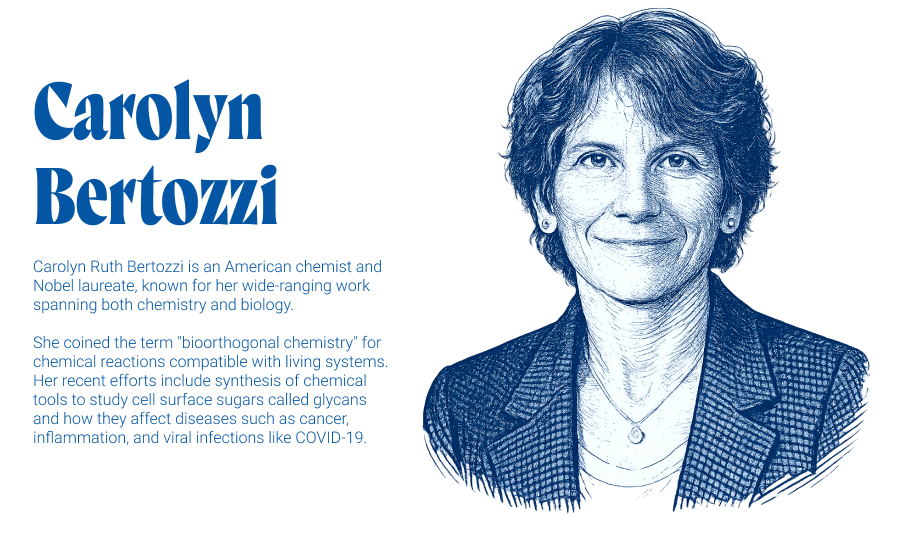
In immunology and chemical biology, Carolyn Bertozzi has expanded the boundaries of how we study living systems. Her development of bioorthogonal chemistry enables scientists to observe and manipulate biological processes inside cells without disrupting them, a capability that is now foundational in cancer research, immunology, and drug discovery[2].

Neuroscience also continues to evolve thanks to women pushing conceptual and technical limits. Eve Marder has transformed how scientists understand neural circuits, demonstrating that biological systems are robust, adaptable, and far more flexible than once believed. Her influence remains strong, especially as researchers explore brain resilience and neurological disease[3].
Together, these scientists illustrate how modern biology is not only about discovery, but about creating tools and frameworks that empower entire research communities.
Women Leading Innovation in Chemistry
Chemistry underpins nearly every scientific discipline, and women chemists are redefining what chemical innovation looks like in the 21st century, placing sustainability, efficiency, and real-world impact at the forefront.

Frances Arnold continues to shape chemistry through directed evolution, a technique that uses nature-inspired selection to design powerful new enzymes. Her work remains central to greener manufacturing processes, renewable energy solutions, and sustainable chemical production[4].
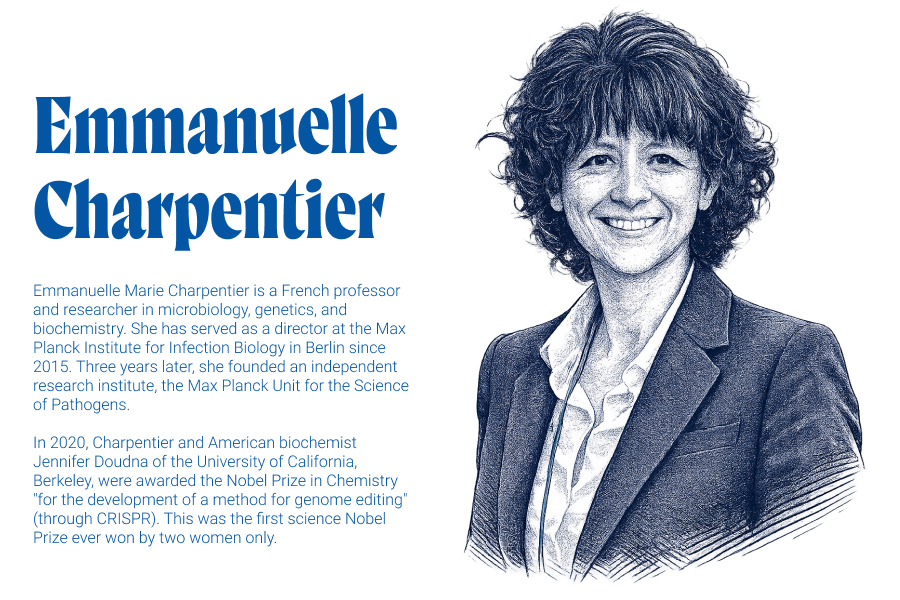
Another key figure is Emmanuelle Charpentier, whose research bridges chemistry and biology. Beyond the origins of CRISPR technology, her ongoing work explores molecular mechanisms in microbial systems that inspire new biochemical tools and therapeutic strategies[5].
Across academia and industry, women chemists are leading advances in catalysis, polymer science, materials chemistry, and nanotechnology. Their research contributes directly to cleaner energy storage, recyclable materials, and safer chemicals: advances that are increasingly vital in a climate-conscious world.
Women Across Scientific Frontiers
The influence of women in science extends far beyond traditional laboratory disciplines.
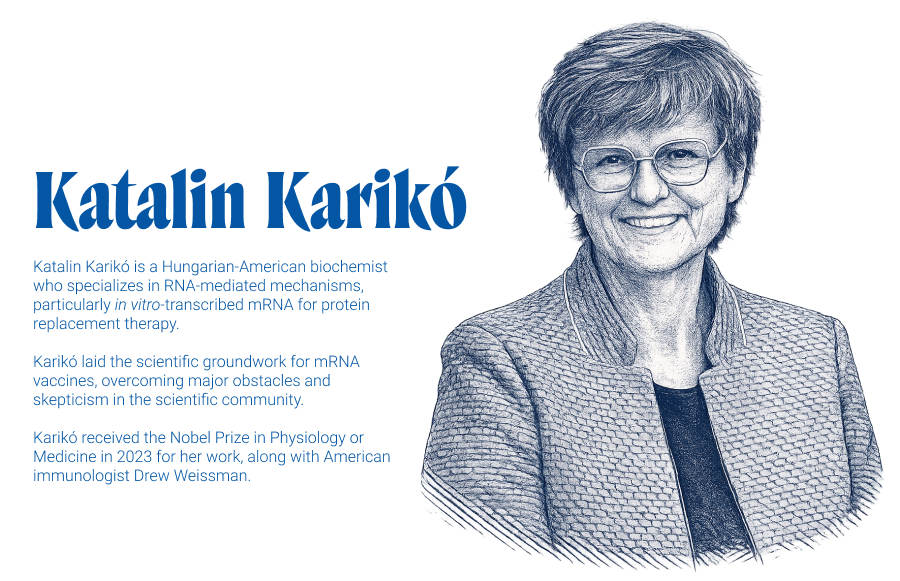
In medicine and biotechnology, Katalin Karikó continues to shape global health through her foundational work on mRNA technologies. These platforms now support not only vaccines, but also cancer therapies and treatments for rare diseases[6].

In artificial intelligence and computational science, Fei-Fei Li has been instrumental in promoting human-centered and ethical AI. Her leadership is especially relevant in 2025, as AI becomes deeply embedded in biological imaging, diagnostics, and data-driven discovery[7].

Physics and engineering also benefit from women redefining excellence and leadership. Donna Strickland continues to inspire researchers through her work on high-intensity lasers—technologies now used in medical procedures, manufacturing, and fundamental research[8].
Across climate science, astronomy, data science, and environmental research, women are not just participating, they are leading, mentoring, and reshaping the culture of science itself.
Supporting Women in Science at Pipette.com
At Pipette.com, we are proud to support women scientists at every stage of their research journey. From students running their first experiments to principal investigators leading advanced laboratories, access to reliable, high-quality equipment is essential for turning ideas into results.
We believe that great science deserves great tools. Pipette.com is committed to providing precision laboratory equipment, dependable service, and expert support so researchers can focus on what matters most - their experiments, discoveries, and impact. By supporting laboratories around the world, we aim to contribute to a more inclusive and innovative scientific ecosystem.
Supporting women in science is not only about recognition; it’s about empowerment, opportunity, and ensuring that talent is never limited by access to resources.
Looking Ahead
As we mark February 11, the International Day of Women and Girls in Science, we celebrate achievements while also recommitting to progress. Equity in funding, leadership, mentorship, and visibility remains essential for science to reach its full potential.
By investing in women scientists, amplifying their voices, and supporting their work with the right tools and infrastructure, we help shape a future where science is stronger, smarter, and more inclusive, for everyone.
You might be also interested in:


Frequently Asked Questions (FAQ):
Why is February 11 important for women in science?
February 11 is recognized globally as the International Day of Women and Girls in Science. The day highlights the critical role women play in scientific advancement and promotes equal access to education, research opportunities, and leadership in STEM fields. It also serves as a reminder that diversity in science strengthens innovation and discovery.
Why is it important to support women and girls in science?
Supporting women and girls in science helps ensure that talent, creativity, and perspectives are not lost due to inequality. Diverse research teams are proven to be more innovative, produce stronger results, and address global challenges more effectively. When women thrive in science, the entire scientific community benefits.
Which scientific fields are highlighted in this blog?
This blog highlights women making an impact across biology, chemistry, medicine, biotechnology, physics, artificial intelligence, and interdisciplinary research. While these fields are featured, women are contributing groundbreaking work in every area of science and engineering.
Who are some influential women scientists today?
The blog highlights globally recognized scientists such as Jennifer Doudna, Carolyn Bertozzi, Frances Arnold, Emmanuelle Charpentier, Katalin Karikó, Fei-Fei Li, and Donna Strickland. These women have made transformative contributions that continue to shape science in 2025.
What is celebrated on February 11?
February 11 is celebrated worldwide as the International Day of Women and Girls in Science. The day recognizes the vital contributions of women to scientific research and innovation while promoting equal access to education, careers, and leadership opportunities in STEM fields.
List of References:
- Nobel Laureate Jennifer Doudna on CRISPR and the Future of Gene Editing
- Bertozzi Reflects on the Potential of Bioorthogonal Chemistry
- Degenerate neuronal and circuit mechanisms important for generating rhythmic motor patterns
- Illuminating the universe of enzyme catalysis in the era of artificial intelligence
- Emmanuelle Charpentier on the role of science in society
- Katalin Karikó on mRNA’s Next Frontier: Beyond COVID
- AI Pioneer Fei-Fei Li Ushers In Next Frontier Of Artificial Intelligence
- Einstein Lectures 2025