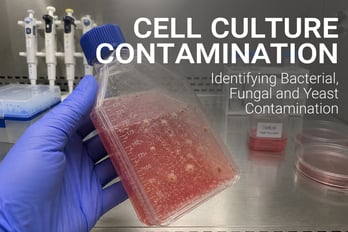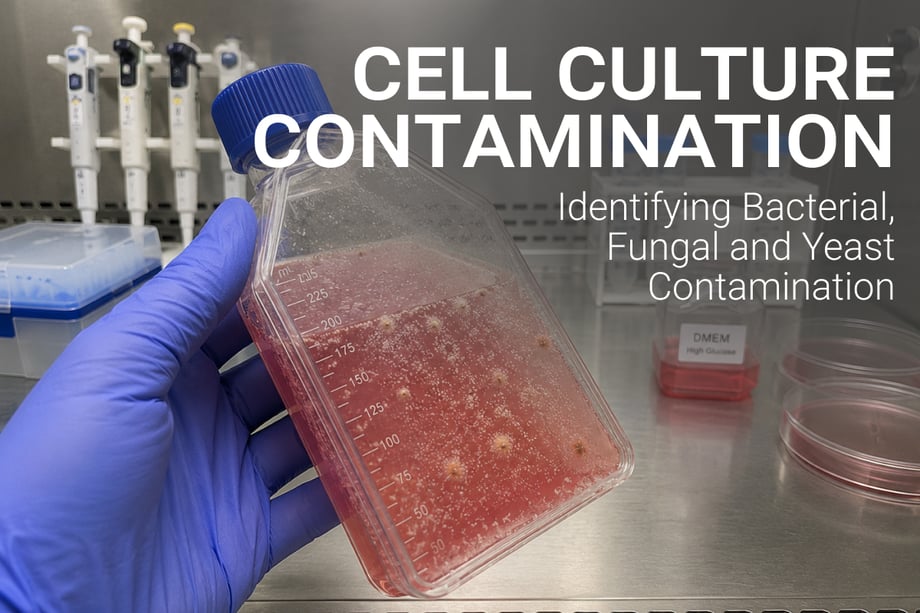
Cell culture contamination is one of the most common challenges faced by researchers in life science laboratories. Even minor contamination can compromise experimental results, lead to the loss of valuable cell lines, and increase research costs. Understanding how to identify bacterial, fungal and yeast contamination, and how to prevent it is essential for maintaining healthy cell cultures and ensuring reproducible results.
From this guide, you will learn:
- What cell culture contamination is and why it matters
- The differences between bacterial, fungal and yeast contamination
- Common signs and symptoms of contamination in cell cultures
- Typical sources of contamination in laboratory environments
- Best practices for preventing contamination during cell culture workflows
- Essential laboratory equipment and consumables used for contamination control
- How to detect contamination early and protect valuable cell lines
- Tips for maintaining reliable and reproducible cell culture results
What Is Cell Culture Contamination?
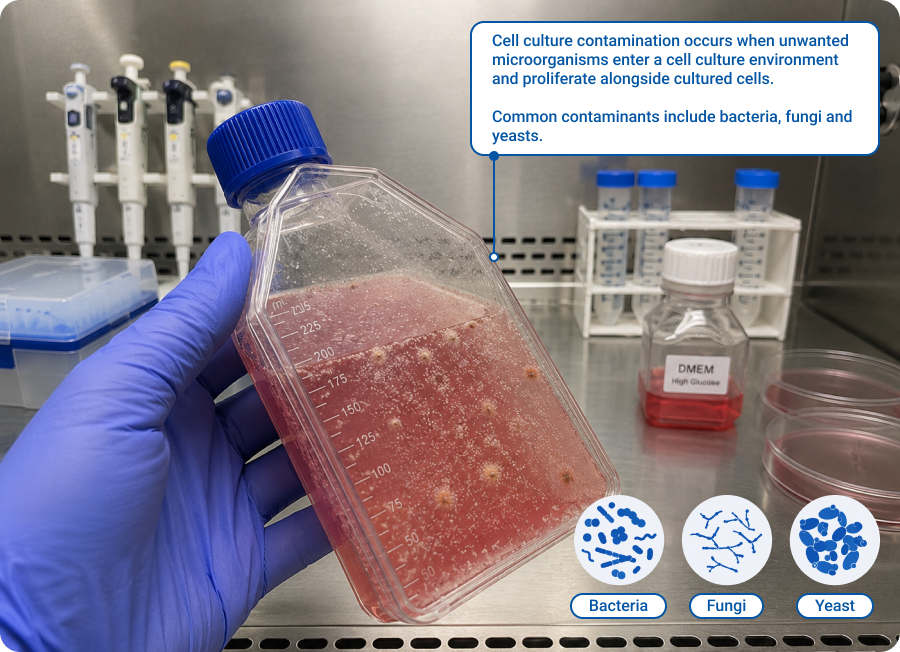
Cell culture contamination occurs when unwanted microorganisms enter a cell culture environment and proliferate alongside cultured cells. Common contaminants include bacteria, fungi and yeasts. These microorganisms compete with cells for nutrients, alter culture conditions and can significantly impact data quality.
Routine monitoring and proper laboratory practices, combined with high-quality laboratory consumables and equipment are critical for contamination control.
Identifying Different Types Of Contamination
Bacterial Contamination
Bacterial contamination is often the easiest to detect because bacteria grow rapidly and cause noticeable changes in culture media.
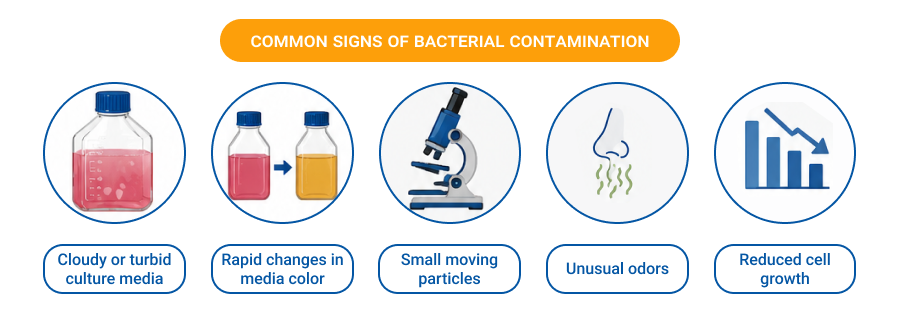
Common Signs of Bacterial Contamination
- Cloudy or turbid culture media
- Rapid changes in media color due to pH shifts
- Small moving particles visible under a microscope
- Unusual odors from culture vessels
- Reduced cell growth and viability
Under microscopic examination, bacterial contaminants may appear as tiny rod-shaped or spherical particles moving independently of cultured cells.
Sources of Bacterial Contamination
- Improper aseptic technique
- Non-sterile pipette tips
- Contaminated reagents or media
- Poorly maintained biosafety cabinets
- Cross-contamination between cultures
Using sterile filtered pipette tips, serological pipettes, and certified cell culture flasks can significantly reduce contamination risks. Also, working in biosafety cabinet will minimize the risk of contamination.
Identifying Fungal Contamination
Fungal contamination, particularly from molds, is highly problematic because fungal spores can spread rapidly throughout a laboratory.
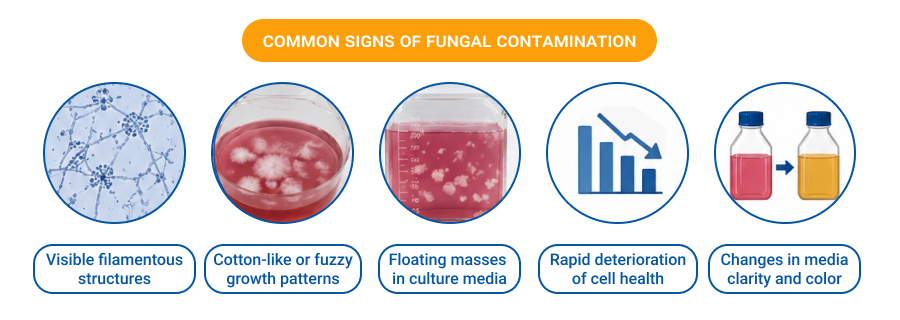
Common Signs of Fungal Contamination
- Visible filamentous structures (hyphae)
- Cotton-like or fuzzy growth patterns
- Floating masses in culture media
- Rapid deterioration of cell health
- Changes in media clarity and color
Unlike bacteria, fungi often form interconnected branching networks that are easily observed under low magnification.
Sources of Fungal Contamination
- Airborne spores
- Inadequate cleaning procedures
- Contaminated incubators
- Non-sterile culture vessels
- Improper storage of reagents
Regular maintenance of CO₂ incubators, routine disinfection, and the use of sterile culture plates and flasks help minimize fungal contamination.
Identifying Yeast Contamination
Yeast contamination can be more difficult to detect because yeast cells often resemble mammalian cells in size and appearance.
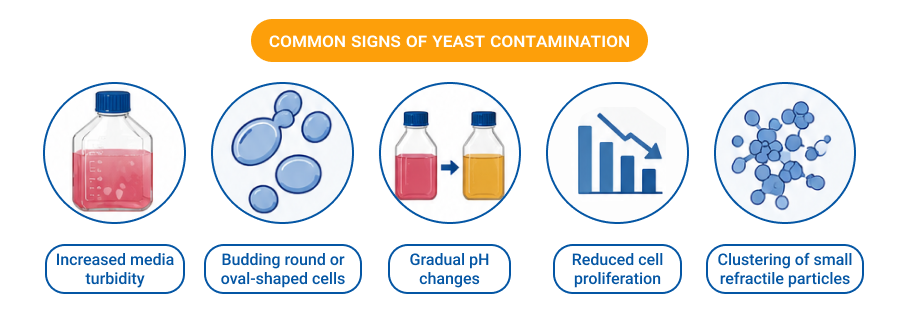
Common Signs of Yeast Contamination
- Increased media turbidity
- Budding round or oval-shaped cells under microscopy
- Gradual pH changes
- Reduced cell proliferation
- Clustering of small refractile particles
Unlike bacteria, yeast cells are larger and typically reproduce through budding, making them distinguishable with careful microscopic observation.
Sources of Yeast Contamination
- Contaminated laboratory surfaces
- Human handling
- Shared reagents
- Improperly sterilized equipment
Consistent use of sterile disposable pipettes,filtered tips, and dedicated culture reagents helps reduce yeast introduction into cell cultures.
Best Practices for Preventing Cell Culture Contamination
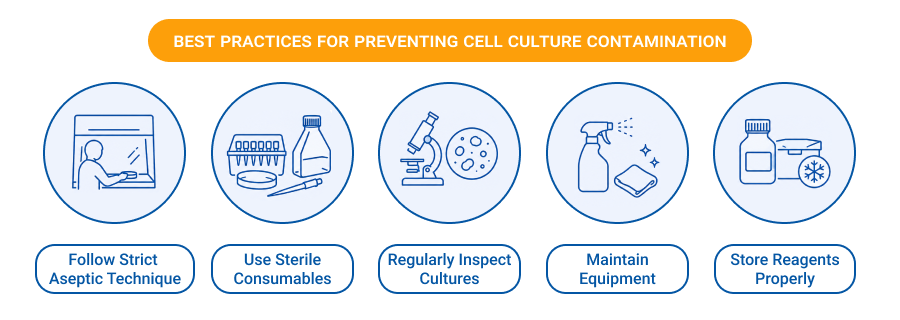
1. Follow Strict Aseptic Technique
Always work within a properly certified biosafety cabinet and minimize exposure of cultures to the surrounding environment.
2. Use Sterile Consumables
Single-use sterile pipette tips, serological pipettes, culture plates, and flasks help maintain culture integrity and reduce contamination risks.
3. Regularly Inspect Cultures
Daily microscopic examination enables early identification of contamination before it spreads to additional cultures.
4. Maintain Equipment
Routine cleaning and validation of incubators, biosafety cabinets, and laboratory workspaces help eliminate contamination sources.
5. Store Reagents Properly
Use sterile storage containers, avoid repeated freeze-thaw cycles, and label reagents clearly to prevent accidental cross-contamination.
Essential Equipment for Contamination Detection
Early detection is critical to preventing contamination from spreading. Laboratories commonly use:
- Inverted microscopes for routine culture monitoring
- Cell culture flasks and dishes for controlled growth environments
- Sterile pipette tips and micropipettes for accurate liquid handling
- Serological pipettes for media transfer
- Centrifuge tubes for sample processing
- Biosafety cabinets for aseptic workflows
- CO₂ incubators for controlled cell growth conditions
- Filtration systems for sterilizing media and reagents
High-quality sterile consumables reduce the likelihood of introducing contaminants during routine procedures.
 |
.png?width=206&height=350&name=ep%20Dualfilter%20T.I.P.S.%C2%AE%200.1%20%E2%80%93%205%20mL%2c%20PCR%20Clean%2c%20120%20mm%2c%20120%20tips%20(5%20racks%20%C3%97%2024%20tips).png) |
 |
 |
Final Thoughts
Bacterial, fungal and yeast contamination can severely impact cell culture experiments, making early identification and prevention essential for laboratory success. Recognizing characteristic signs, such as media turbidity, fungal hyphae or budding yeast cells, allows researchers to respond quickly and protect valuable cell lines.
By combining proper aseptic techniques with reliable laboratory equipment and sterile consumables such as pipette tips, serological pipettes, culture flasks, centrifuge tubes, filtration units, and biosafety cabinets, laboratories can significantly reduce contamination risks and maintain high-quality, reproducible research outcomes.
You might be also interested in:
 |
 |
 |
| Laboratory Enclosure Filters Explained | What Is Cytology? Exploring Cell-Based Research and Lab Essentials | The Ultimate Guide to Pipette Tips |
Frequently Asked Questions (FAQ)
What is cell culture contamination?
Cell culture contamination occurs when unwanted microorganisms such as bacteria, fungi, or yeast enter a cell culture and grow alongside the intended cells. Contamination can alter experimental conditions, affect cell health, and compromise research results.
What are the most common types of cell culture contamination?
The most common types of cell culture contamination are bacterial contamination, fungal contamination (including molds), and yeast contamination. Each contaminant has distinct characteristics and can impact cell cultures in different ways.
How can I tell if my cell culture is contaminated?
Common signs of contamination include cloudy culture media, unexpected color changes in the media, visible particles under a microscope, unusual odors, reduced cell growth, and changes in cell morphology. Regular microscopic examination can help detect contamination early.
What does bacterial contamination look like in cell culture?
Bacterial contamination often causes media to become cloudy or turbid. Under a microscope, bacteria may appear as tiny rod-shaped or spherical particles moving independently of cultured cells. Rapid pH changes and unusual odors are also common indicators.
How can fungal contamination be identified?
Fungal contamination is typically recognized by visible filamentous structures called hyphae, cotton-like or fuzzy growth patterns, floating masses in culture media, and rapid deterioration of cell health. Fungi can spread quickly throughout a laboratory if not addressed promptly.
What are the signs of yeast contamination?
Yeast contamination often causes increased media turbidity, gradual pH changes, reduced cell proliferation, and the appearance of budding round or oval-shaped cells under a microscope. Yeast cells may also appear as clustered refractile particles.
What causes cell culture contamination?
Common sources of contamination include poor aseptic technique, non-sterile consumables, contaminated reagents, airborne microorganisms, improperly maintained biosafety cabinets, contaminated incubators, and cross-contamination between cultures.
How can contamination be prevented in cell culture?
Contamination can be minimized by following strict aseptic techniques, working in a certified biosafety cabinet, using sterile consumables, regularly inspecting cultures, maintaining laboratory equipment, and properly storing reagents and media.
Why is a biosafety cabinet important for cell culture?
A biosafety cabinet provides a controlled, sterile working environment that helps prevent airborne contaminants from entering cell cultures. Proper use of a biosafety cabinet is one of the most effective ways to reduce contamination risks.
What laboratory consumables help reduce contamination risks?
Sterile filtered pipette tips, serological pipettes, cell culture flasks, culture plates, centrifuge tubes, filtration units, and sterile reagent containers all help maintain aseptic conditions and reduce contamination risks.
Can contaminated cell cultures be saved?
In most cases, heavily contaminated cell cultures should be discarded to prevent contamination from spreading to other cultures. Early detection may sometimes allow researchers to isolate unaffected cultures, but prevention is generally the best approach.
How often should cell cultures be checked for contamination?
Cell cultures should be visually inspected daily and routinely examined under a microscope. Frequent monitoring allows researchers to identify contamination early before it affects additional cultures or experimental outcomes.
What equipment is commonly used to detect contamination?
Researchers commonly use inverted microscopes, biosafety cabinets, CO₂ incubators, filtration systems, cell culture flasks, and sterile pipetting equipment to monitor, detect, and prevent contamination in cell culture workflows.
Why is contamination control important for reproducible research?
Contamination can alter cell behavior, nutrient availability, gene expression, and experimental outcomes. Effective contamination control helps ensure reliable, reproducible, and scientifically valid results.