Accurate pH measurement is essential in virtually every scientific laboratory. Whether you're conducting pharmaceutical research, testing water quality, growing cell culture or performing chemical analysis, even small changes in pH can significantly impact experimental results. That's why laboratories rely on pH meters instead of simple test strips when precision and repeatability matter.
From this guide, you will learn:
- What a pH meter is and why it is essential in laboratory testing.
- How a pH meter works and the science behind accurate pH measurement.
- The different types of pH meters and their key features.
- Common laboratory applications for pH meters across various industries.
- Important factors to consider when choosing the right pH meter for your lab.
- Best practices for calibration, maintenance, and accurate measurements.
- How to select a reliable laboratory pH meter for your specific workflow.
What Is a pH Meter?
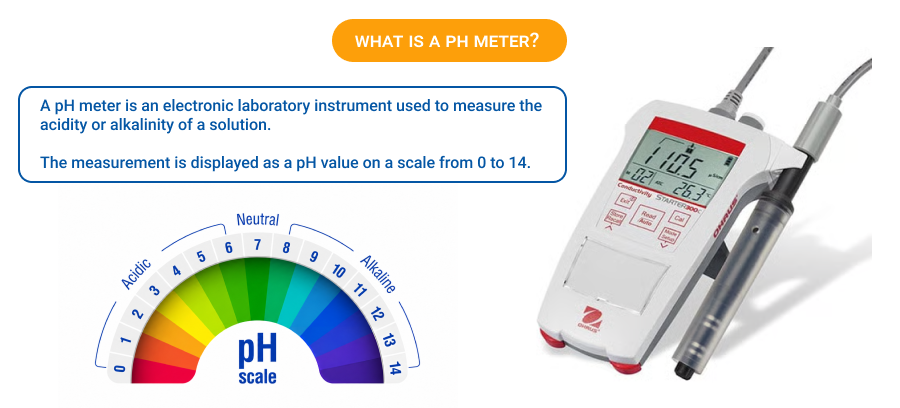
A pH meter is an electronic laboratory instrument used to measure the acidity or alkalinity of a solution. The measurement is displayed as a pH value on a scale from 0 to 14:
- pH below 7: Acidic
- pH 7: Neutral
- pH above 7: Alkaline (basic)
Unlike color-changing indicator strips, laboratory pH meters provide highly accurate digital measurements, making them ideal for research, quality control, manufacturing and analytical testing.
Modern pH meters often include additional features such as automatic temperature compensation, digital calibration, data logging, and buffer recognition, helping laboratories maintain consistent and reliable measurements.
How Does a pH Meter Work?
A pH meter measures the electrical potential generated between a glass sensing electrode and a reference electrode when immersed in a solution.
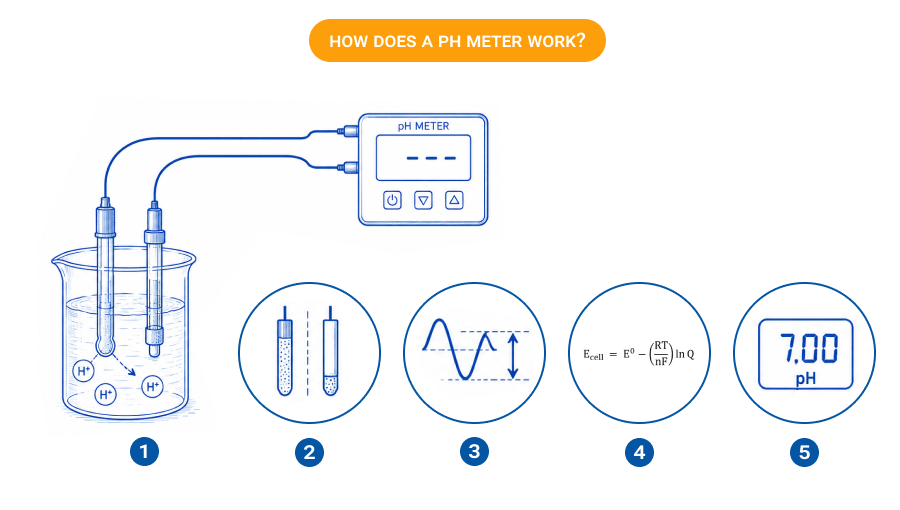
Here's the basic process:
- The glass electrode reacts to the concentration of hydrogen ions (H+) in the sample.
- The reference electrode provides a stable comparison voltage.
- The meter calculates the voltage difference between the two electrodes.
- This electrical signal is converted into a pH value using the Nernst equation.
- The measured pH is displayed digitally.
Because pH readings are temperature-dependent, many laboratory meters include Automatic Temperature Compensation (ATC), which adjusts measurements for improved accuracy when sample temperatures vary.
To ensure reliable results, pH meters should be calibrated regularly using standard buffer solutions, typically at pH 4, 7 and 10.
Types of pH Meters
Different laboratories have different testing requirements. Choosing the right instrument depends on where and how measurements will be performed.
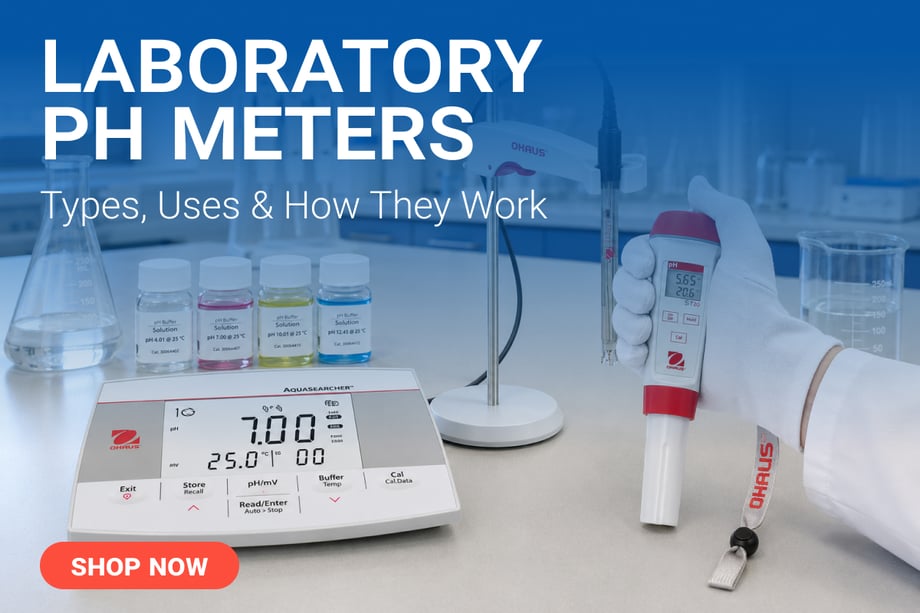
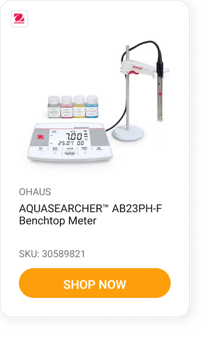
Bench pH Meters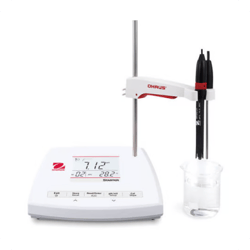
Bench pH meters are designed for permanent laboratory workstations where high accuracy and repeatability are essential.
They typically offer:
- Large digital displays
- High measurement accuracy
- Multiple calibration points
- Data storage capabilities
- Electrode holders
- Advanced measurement settings
Bench models are commonly used in research laboratories, pharmaceutical facilities, universities, biotechnology labs and quality control departments.
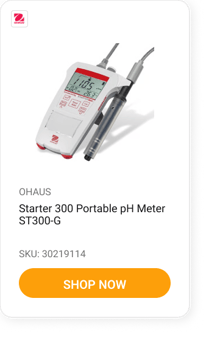
Portable pH Meters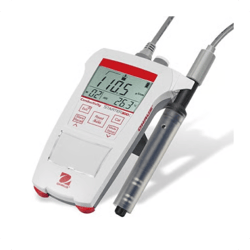
Portable pH meters provide accurate measurements outside traditional laboratory settings.
They are ideal for:
- Environmental sampling
- Water testing
- Field research
- Industrial inspections
- Educational laboratories
Portable models are lightweight, battery-powered and designed for easy transportation while still delivering laboratory-grade performance.
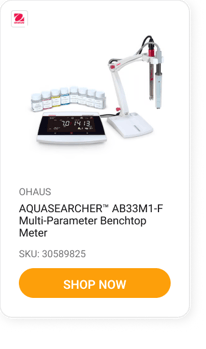
Multi-Parameter Meters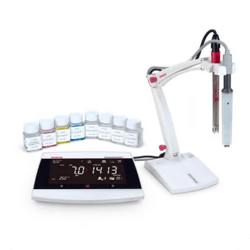
Some laboratories require more than pH measurement alone.
Multi-parameter meters combine pH testing with additional analytical capabilities, including:
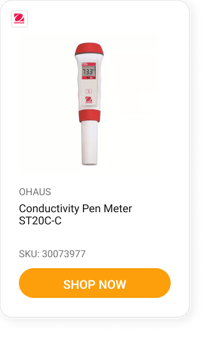
- Conductivity
- ORP (Oxidation Reduction Potential)
- Salinity
- Total Dissolved Solids (TDS)
- Resistivity
- Temperature
Using one instrument for multiple electrochemical measurements improves efficiency while reducing equipment costs and bench space requirements.
Common Laboratory Applications of pH Meters
pH measurement is fundamental across many scientific disciplines.
Pharmaceutical Laboratories
Drug formulations often require strict pH control to ensure product stability, effectiveness and regulatory compliance. Accurate pH measurements are performed throughout development, manufacturing and quality assurance.
Biotechnology and Cell Culture
Cell cultures require carefully controlled pH levels to maintain healthy growth conditions. Even small pH fluctuations can affect cell viability, protein expression, and experimental reproducibility.
Environmental Testing
Environmental laboratories use pH meters to analyze groundwater, wastewater, lakes, rivers and drinking water. Monitoring pH helps assess ecosystem health and regulatory compliance.
Food and Beverage Testing
Food manufacturers measure pH to ensure product consistency, optimize flavor, improve shelf life, and maintain food safety standards.
Chemical Laboratories
Many chemical reactions are highly sensitive to pH. Researchers routinely monitor acidity throughout synthesis, formulation, and analytical testing.
Academic Research
Universities and teaching laboratories use pH meters to demonstrate electrochemistry concepts while supporting experiments across chemistry, biology, microbiology and environmental science.
 |
 |
 |
 |
Why Accurate pH Measurement Matters
Reliable pH measurement helps laboratories:
- Improve experimental reproducibility
- Maintain quality control standards
- Reduce measurement errors
- Meet regulatory requirements
- Protect sensitive samples
- Increase confidence in analytical results
Even slight measurement inaccuracies can affect research outcomes, making proper calibration and high-quality instrumentation essential.
Choosing the Right Laboratory pH Meter
When selecting a laboratory pH meter, consider the following factors:
- Accuracy requirements for your application
- Bench or portable design depending on your workflow
- Automatic temperature compensation (ATC)
- Calibration options
- Data storage and connectivity
- Ease of use
- Electrode compatibility
- Multi-parameter capabilities, if additional measurements are needed
Laboratories performing routine testing may only require a straightforward pH meter, while research facilities often benefit from advanced models with expanded functionality and data management features.
Find the Right pH Meter for Your Laboratory
Whether you need a dependable bench pH meter for routine laboratory testing, a portable pH meter for field work or a multi-parameter instrument for advanced electrochemical analysis, selecting the right equipment helps improve measurement accuracy and laboratory efficiency.
Pipette.com offers a selection of laboratory pH meters from trusted manufacturers, including bench, portable, and multi-parameter models designed for research, quality control, education, and industrial laboratories. Explore our collection to find a solution that matches your workflow, accuracy requirements and budget.
You might be also interested in:
 |
 |
 |
| Laboratory Enclosure Filters Explained | What Is Cytology? Exploring Cell-Based Research and Lab Essentials | The Ultimate Guide to Pipette Tips |
Frequently Asked Questions (FAQ)
What is a pH meter used for?
A pH meter is used to measure the acidity or alkalinity (pH) of a liquid sample. It is commonly used in laboratories for research, quality control, environmental testing, pharmaceutical development, biotechnology, food and beverage production, and water analysis.
How does a laboratory pH meter work?
A laboratory pH meter measures the voltage difference between a glass sensing electrode and a reference electrode immersed in a solution. The instrument converts this electrical signal into a precise pH value, often using automatic temperature compensation (ATC) to improve accuracy.
How often should a pH meter be calibrated?
For the most accurate results, a pH meter should be calibrated before each day of use or whenever high-precision measurements are required. Calibration is typically performed using standard buffer solutions with known pH values, such as pH 4.01, 7.00, and 10.01.
What is the difference between a bench and a portable pH meter?
Bench pH meters are designed for laboratory environments and typically offer higher accuracy, advanced features, and data management capabilities. Portable pH meters are lightweight and battery-powered, making them ideal for fieldwork, environmental testing, and on-site measurements while still providing reliable results.
How do I choose the right pH meter for my laboratory?
When selecting a laboratory pH meter, consider factors such as measurement accuracy, sample type, calibration options, automatic temperature compensation, data logging capabilities, electrode compatibility, and whether you need additional parameters like conductivity or ORP. Choosing a meter that matches your laboratory's workflow helps ensure accurate and reliable results.