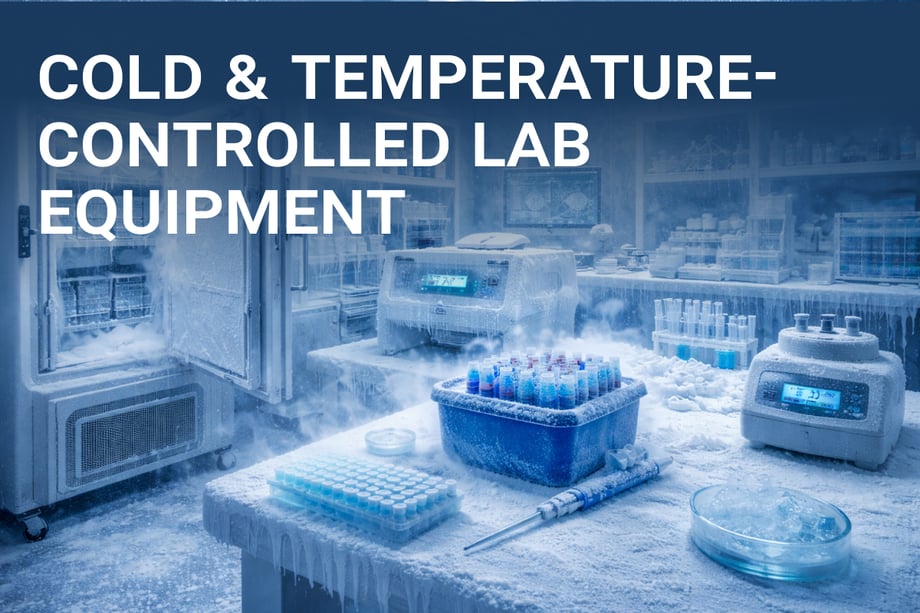
In most labs, the biggest threat to stored samples is not the freezer setpoint. It’s everything around it: door openings, handling time, labeling errors, and heat introduced during processing.
Temperature control is a foundational requirement in any laboratory. From ultra-low-temperature freezer storage at -80°C to controlled incubation, shaking, and refrigerated homogenization, cold-chain infrastructure directly impacts sample integrity, reproducibility, and regulatory compliance.
This guide provides a practical overview of essential cold storage and temperature-controlled laboratory equipment used across research, biotech, pharmaceutical, and clinical laboratories.
In this guide, you will get:
- A clear overview of essential cold storage and temperature-controlled lab equipment
- Practical explanations of how each product is used in real laboratory workflows
- Key applications across research, biotech, pharma, and clinical labs
- Insights into sample protection, organization, incubation, and processing
- A complete picture of how these solutions support the transition from storage to active experimentation
Ultra-Low Temperature Storage
Ultra-low temperature freezers are specialized laboratory freezers designed to maintain extremely low temperatures, typically down to -80°C, for the safe, long-term preservation of sensitive biological and chemical materials.
Unlike standard laboratory or household freezers, ULT freezers are engineered with advanced insulation, powerful compressor systems, and precise digital temperature controls to ensure uniform cooling and minimal temperature fluctuation.
Typical laboratory applications: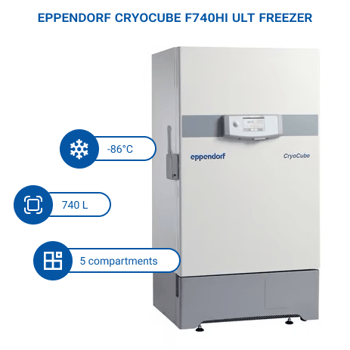
- Cell line storage
- DNA/RNA preservation
- Vaccine and pharmaceutical storage
- Clinical trial sample archiving
- Protein and enzyme preservation
- Biobank sample management
How labs use it:
Samples are typically stored in cryo vials or boxes organized within internal racks. Laboratories rely on consistent temperature uniformity to prevent freeze-thaw cycles that could damage sensitive biomolecules. Modern ULT freezers also include monitoring systems, alarms, and energy-efficient compressors to support regulatory compliance and long-term reliability.
Cryogenic Sample Organization & Storage Components
Efficient storage isn’t just about maintaining temperature, it’s about accessibility, traceability, and protection.
Freezer Storage Boxes
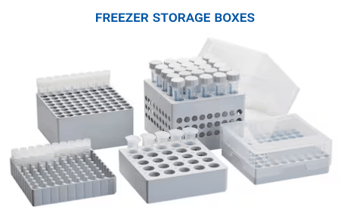
Freezer storage boxes are durable storage containers designed to hold cryo vials or microtubes inside ULT freezers.
Typical laboratory applications:
- Biobanking
- Academic research laboratories
- Pharmaceutical sample management
- Clinical diagnostics
Labs use storage boxes to:
- Prevent direct exposure to cold airflow
- Reduce frost buildup
- Improve inventory management
- Maximize freezer space utilization
Structured storage reduces retrieval time and limits freezer door openings, helping maintain internal temperature stability.
%20fits%201.0mL%20and%202.0mL.png?width=206&height=350&name=Globe%20Scientific%20Freezing%20Box%202_%20Cardboard%2081-Place%20(9x9%20format)%20fits%201.0mL%20and%202.0mL.png) |
..png?width=206&height=350&name=MTC-Bio%2096%20Place%20Cardboard%20PCR%20Freezer%20Box%2c%20SBS%20Footprint%20(124%20x%2086%20x%2025mm)..png) |
_%20Holds%2081%20vials%20(9x9%20format).png?width=206&height=350&name=Globe%20Scientific%20BioBox%2081_%20for%201.0mL%20and%202.0mL%20Cryogenic%20Vial_%20CryoCLEAR%20Vials_%20Polycarbonate%20(PC)_%20Holds%2081%20vials%20(9x9%20format).png) |
 |
Workstation Racks for Cryo Vials
Racks for cryo vials are support systems that hold cryogenic vials upright for storage or bench work.
Applications:
- Sample sorting and labeling
- Pre-freezing organization
- Thawing workflows
- Inventory management
Racks ensure that vials remain stable and clearly labeled during handling, minimizing misidentification risks.
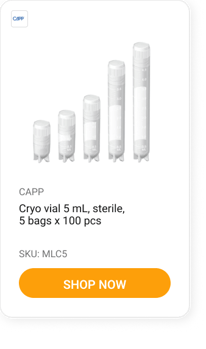
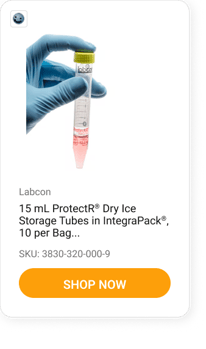
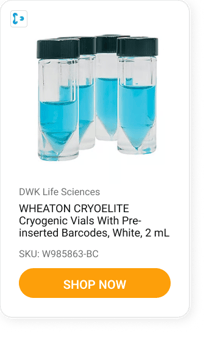
Cryo Vials
Cryo vials are specialized tubes designed to withstand ultra-low and cryogenic temperatures.
Common features: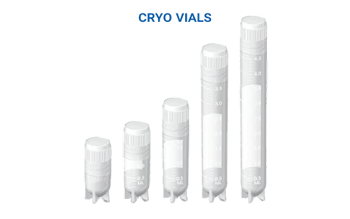
- Internal or external threading
- Silicone gasket sealing
- Sterile and non-sterile options
- Printed graduations and writing surfaces
Applications:
- Cell storage
- Blood plasma preservation
- Tissue sample archiving
- Microbial strain storage
Cryo vials are engineered to prevent leakage and cracking during freezing and thawing cycles.
 |
 |
.png?width=206&height=350&name=MTC-Bio%2010%20mL%20FreezeTechTM%20Transport%20Vial%2c%20Screwcap%2c%20Temperature%20Indicator%2c%20Sterile%2c%20Graduated%20(500%20total).png) |
 |
Temperature-Controlled Shaking & Incubation
As samples move from storage into experimental workflows, precise temperature control combined with agitation becomes essential.
Incubating/Cooling Orbital Shakers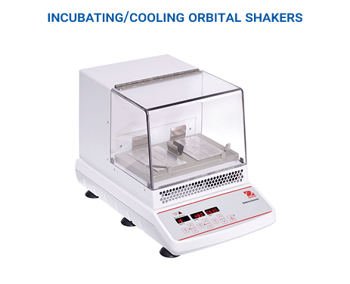
Incubating/cooling orbital shaker is a benchtop shaking platform with integrated heating and cooling capabilities.
The shaker provides orbital motion while maintaining a programmed temperature. Cooling capability allows labs to perform experiments below ambient temperature, which is useful for temperature-sensitive cultures or enzymatic reactions.
Applications:
- Bacterial culture growth
- Yeast cultivation
- Protein expression
- Cell culture expansion
- Solubility studies
Advantages for laboratories:
- Consistent aeration of cultures
- Controlled growth conditions
- Reduced need for separate incubators and cooling chambers
- Reproducible agitation speeds
This dual heating/cooling function supports a wide range of research disciplines, from microbiology to biochemistry.
Incubating/Cooling Thermal Shakers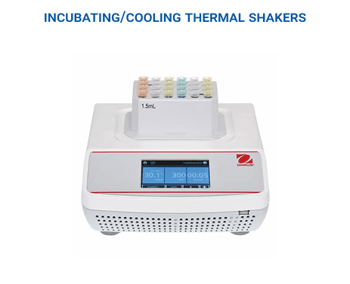
An incubating/cooling thermal shaker is a compact instrument combining heating, cooling, and high-speed mixing for microplates and tubes.
Thermal shakers maintain consistent temperatures while mixing small-volume samples, ensuring uniform reaction conditions across all wells or tubes.
Applications:
- PCR setup
- Enzyme kinetics
- ELISA preparation
- DNA/RNA amplification prep
- Sample incubation during reactions
For molecular biology labs, consistent mixing and precise thermal control directly impact reaction efficiency and reproducibility.
%2c%20up%20to%20%E2%80%9365%C2%B0C.png?width=206&height=350&name=OHAUS%20Incubating%20Cooling%20Orbital%20Shaker%20(2%20Microplates%20or%202%20Modular%20Blocks)%2c%20up%20to%20%E2%80%9365%C2%B0C.png) |
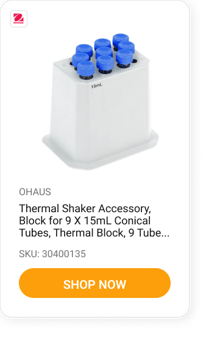 |
%2c%20up%20to%20%E2%80%93100%C2%B0C%2c%20120V....png?width=206&height=350&name=OHAUS%20Incubating%20Cooling%20Thermal%20Shaker%20(1%20Thermal%20block)%2c%20up%20to%20%E2%80%93100%C2%B0C%2c%20120V....png) |
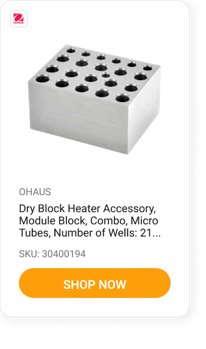 |
Refrigerated Homogenization 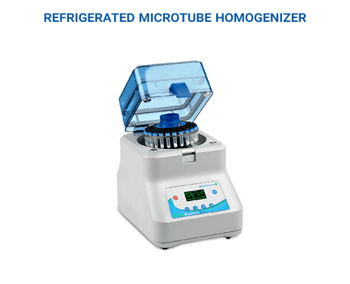
A refrigerated microtube homogenizer is a laboratory instrument designed to mechanically disrupt and homogenize biological samples in sealed microtubes while maintaining controlled low temperatures. It typically uses high-speed shaking or bead-beating technology to break down tissues, cells, or microorganisms, and includes an integrated cooling or refrigeration system to prevent heat buildup during processing.
Applications:
- Tissue disruption
- DNA extraction
- RNA isolation
- Microbial cell lysis
- Protein extraction
- Forensic sample preparation
How laboratories use it:
Samples are placed in tubes with beads. The machine agitates them at high speeds, breaking cells apart. The built-in cooling system maintains stable temperatures throughout the process.
For high-throughput labs processing dozens of samples daily, refrigerated homogenization improves yield and protects sample integrity.
Integrated Cold-to-Active Laboratory Workflow
Together, these products support a complete laboratory temperature-control ecosystem:
- Long-term preservation in ULT freezers
- Structured organization using storage boxes, racks, vials, and canes
- Bench stabilization with cooling blocks
- Sample processing through refrigerated homogenization
- Active incubation and mixing using orbital and thermal shakers
This continuum ensures that samples remain protected from collection through analysis.
Temperature Control Is a Year-Round Requirement
Winter may make cold storage feel more top of mind, but in the lab, temperature control never goes out of season. Whether you are preserving samples at -80°C, incubating reactions at set temperatures, or processing tissue with refrigerated homogenization, these tools help protect integrity and support reproducible results.
Moving from storage to active experimentation does not mean leaving the cold behind. It means building a reliable chain of temperature control from collection and organization to processing and analysis. The goal is not just staying cold. It is staying consistent across every step from storage to active experimentation.
At Pipette.com, we support labs with equipment and consumables designed to keep samples stable, traceable, and ready for what comes next.
You might be also interested in:
 |
 |
 |
| 8 Types of Laboratory Centrifuges & The Purposes They Serve | How to Choose the Right Pipette for Your Lab Application | What is a Vortex Mixer? A Lab-Ready Guide for Beginners |
Frequently Asked Questions (FAQ)
What is an ultra-low temperature (ULT) freezer used for in laboratories?
An ultra-low temperature (ULT) freezer is used for long-term storage of temperature-sensitive biological samples at temperatures as low as -80°C. Laboratories rely on ULT freezers to preserve DNA, RNA, proteins, cell lines, vaccines, and clinical specimens while maintaining sample integrity and preventing degradation.
Why is cryogenic storage organization important for sample management?
Proper cryogenic storage organization using cryo vials, freezer storage boxes, workstation racks, and vial canes improves laboratory efficiency and sample traceability. Organized storage reduces retrieval time, minimizes temperature fluctuations caused by frequent door openings, and supports accurate inventory management in research, biotech, and clinical labs.
What are incubating and cooling shakers used for in research labs?
Incubating and cooling shakers are used for controlled temperature mixing in applications such as cell culture growth, protein expression, enzyme reactions, PCR preparation, and molecular biology workflows. These systems combine precise temperature control with consistent orbital or thermal shaking to ensure reproducible experimental results.
What is a refrigerated microtube homogenizer used for?
A refrigerated microtube homogenizer is used to disrupt tissues, cells, and microorganisms while maintaining low temperatures to protect heat-sensitive biomolecules. It is commonly used for DNA extraction, RNA isolation, protein purification, microbial lysis, and other molecular biology applications where temperature control is critical.
What are the benefits of using a laboratory cooling block instead of ice?
Laboratory cooling blocks provide stable, ice-free temperature control during sample preparation and reaction setup. Unlike traditional ice buckets, cooling blocks prevent condensation, reduce contamination risk, and deliver consistent surface cooling for microtubes and reaction vessels in molecular and biochemical workflows.