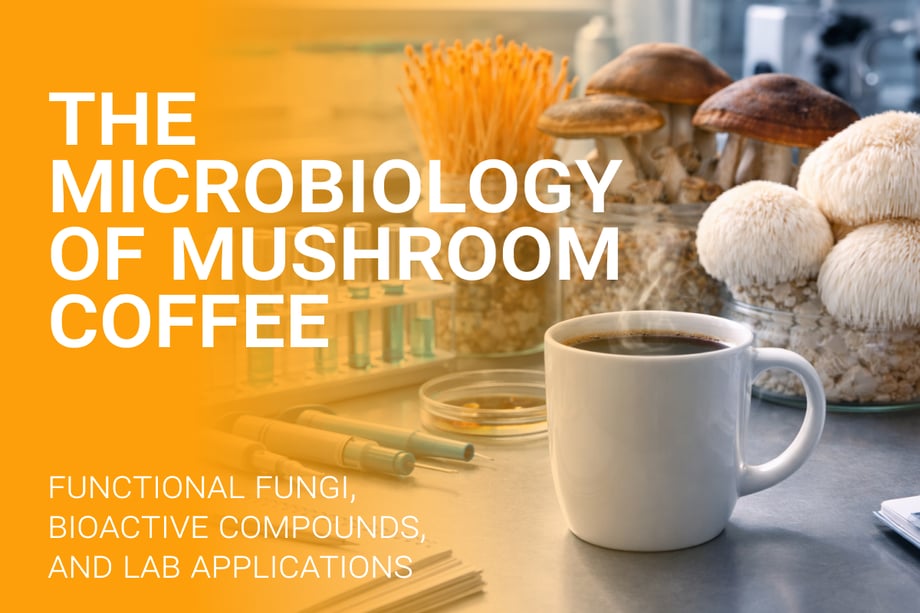
Mushroom coffee has rapidly evolved from a niche wellness product to a mainstream functional beverage. As highlighted in coverage from BBC News and Bon Appétit, consumers are drawn to claims of improved focus, immune support, and smoother energy compared to traditional coffee. But beyond trend cycles and influencer marketing lies a deeper scientific story, one rooted in microbiology, mycology, and bioactive compound research.
But here is the real question for scientists:
Is mushroom coffee a breakthrough in functional microbiology, or simply a well-marketed extract blend riding the adaptogen wave?
For laboratories and biotech professionals, this trend is not about lifestyle. It is about fungal biology, bioactive compound validation, and the gap between mechanistic promise and clinical proof.
Let’s separate signal from noise.
This blog explains:
- The microbiology behind mushroom coffee,
- Key bioactive compounds like β-glucans,
- What scientific studies currently show,
- Lab tools used in fungal research,
- The gap between hype and evidence.
Functional Fungi: The Science Behind the Blend
Mushroom coffee typically combines roasted coffee beans with extracts from medicinal mushrooms such as:
- Lion’s Mane (Hericium erinaceus)
- Reishi (Ganoderma lucidum)
- Chaga (Inonotus obliquus)
- Cordyceps (Cordyceps militaris)
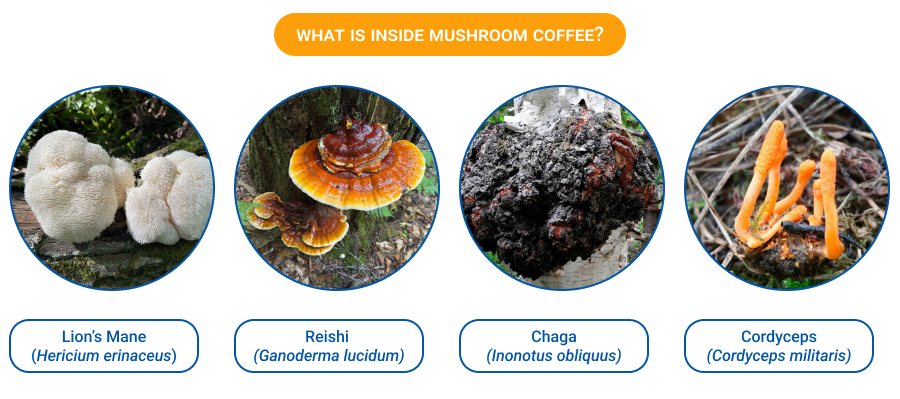
These fungi have long histories in traditional medicine and these are not imaginary superfoods. They contain well characterized metabolite.
Key Bioactive Components
β-Glucans
These structural polysaccharides form part of fungal cell walls and have been widely studied for immunomodulatory activity. Reviews indexed in PubMed describe β-glucans as capable of influencing innate immune signaling pathways and oxidative stress responses[3].
Triterpenoids (Reishi)
Triterpenes from Ganoderma lucidum demonstrate anti-inflammatory and antioxidant properties in vitro and in small human trials[4].
Erinacines and Hericenones (Lion’s Mane)
Research suggests these compounds may stimulate nerve growth factor (NGF) synthesis, potentially influencing cognitive function[5].
Cordycepin (Cordyceps)
A nucleoside analog studied for metabolic and anti-inflammatory activity[6].
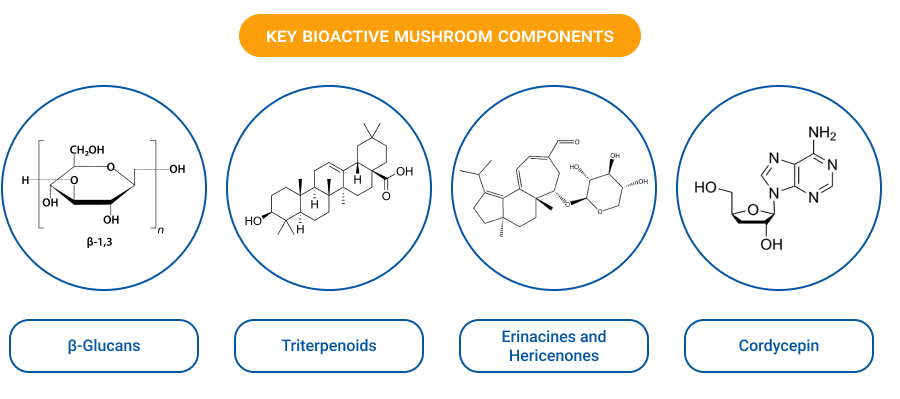
The biochemistry is legitimate. The marketing extrapolation is where things become less clear.
Most robust studies evaluate isolated extracts under controlled laboratory conditions. Very few large-scale, randomized trials evaluate commercial mushroom coffee blends as consumed.
That distinction matters.
Biological plausibility does not equal proven clinical efficacy. Scientists know this. Consumers often do not.
Behind the Trend: It Is Still Microbiology
Here is what the conversation often misses.
Every mushroom coffee product is built on laboratory workflows:
- Sterile fungal cultivation
- Strain verification and contamination control
- Extraction protocols
- Polysaccharide quantification
- Microbial safety testing
The development of mushroom coffee relies heavily on microbiology and mycology techniques. Before any extract reaches a consumer product, fungal cultivation, compound extraction, and biological testing occur in controlled laboratory environments.
Before a single scoop reaches a consumer mug, there is agar, there are laminar flow hoods, there are microplates, and there is quality control.
That is where real value is created.
For microbiologists and lab managers, mushroom coffee is not a beverage story. It is a case study in applied mycology, extraction science, and analytical validation.
1. Fungal Cultivation and Strain Isolation
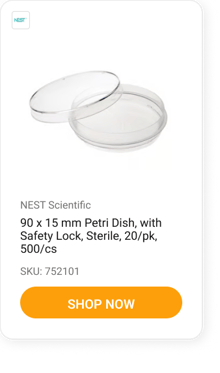
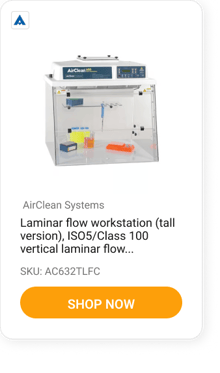
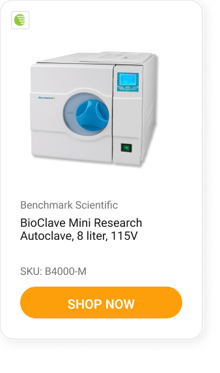
Medicinal mushrooms are grown under sterile conditions to ensure purity and consistency. Lab workflows often include[7]:
- Petri dishes for agar-based fungal culture
- Laminar flow hoods for sterile transfers
- Autoclaves for sterilizing growth media
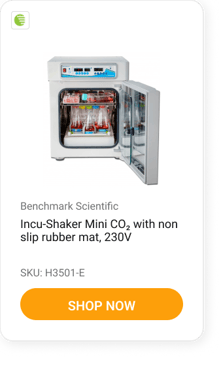
- Controlled incubation chambers for optimizing mycelial growth
Strain verification and contamination control are critical, particularly when fungi are used for ingestible products.
 |
 |
 |
 |
2. Extraction and Quantification of Bioactive Compounds
After cultivation, mushrooms undergo extraction processes (hot water extraction, ethanol extraction, or dual extraction methods) to isolate polysaccharides and secondary metabolites[8].
Laboratory tools frequently used include:
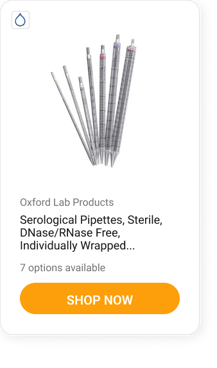
- Serological pipettes for precise liquid handling
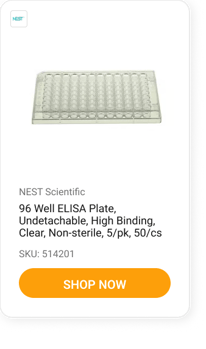
- 96-well microplates for antioxidant or immunoassay screening
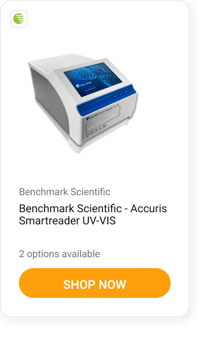
- Plate readers for spectrophotometric analysis
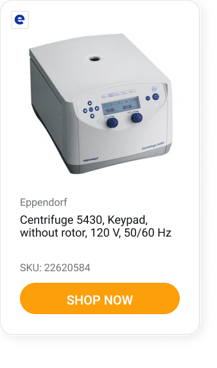
- Centrifuges for compound separation
High-throughput screening helps quantify β-glucan concentration, antioxidant activity, and bioavailability metrics.
 |
 |
 |
 |
3. Safety and Quality Control
Microbial testing ensures absence of harmful contaminants such as pathogenic bacteria, molds, or heavy metal accumulation[9], a known risk in some wild-harvested fungi like chaga.
Microbiology laboratories perform:
- Total aerobic plate counts
- Yeast and mold testing
- PCR-based contamination screening
- Stability testing under various storage conditions
These procedures bridge microbiology and food science, ensuring functional beverages meet regulatory and safety standards.
Evaluating the Health Claims Scientifically. Where the Evidence Stands Today
Let’s be precise. Media coverage notes both enthusiasm and skepticism around mushroom coffee[1]. Experts cited in major publications emphasize that although medicinal mushrooms have documented bioactivity, health claims can outpace evidence.
From a scientific perspective:
- Immunomodulatory effects are primarily demonstrated in vitro or in small human cohorts.
- Cognitive benefits from Lion’s Mane are promising but require larger randomized trials[10].
- Antioxidant assays demonstrate biochemical activity, yet translation to long-term clinical outcomes remains uncertain
For microbiologists and lab professionals, this underscores an important principle: biological plausibility does not equal proven therapeutic efficacy. This is not dismissal. It is a scientific discipline.
If you work in biotech, you know how often promising compounds fail to replicate at scale.
The gap between mechanistic data and validated health claims is where rigor lives.
And rigor takes time.
Trend Meets Laboratory Science. The Real Opportunity for Labs
Here is the sharper perspective:
-
Mushroom coffee is not the story.
-
Standardization is the story.
-
Extraction reproducibility is the story.
-
Quantification accuracy is the story.
-
Contaminant control is the story.
Mushroom coffee may be marketed as a wellness trend, but its foundation lies in fungal biology and microbiological methodology. While current evidence supports the presence of bioactive compounds with potential physiological effects, robust clinical trials are still needed to validate many consumer-facing claims.
For scientists and lab professionals, the rise of mushroom coffee is not just a lifestyle story, it’s a reminder that microbiology continuously shapes modern food innovation. Functional beverages will continue to trend. Some will be validated. Some will fade.
But the need for precise microbiological workflows, validated assays, and reliable lab infrastructure does not trend. It persists.
That is where serious science happens.
Mushrooms in the Mug? We’ll Stick to Real Coffee for the Lab
At Pipette.com, we respect emerging science. We also respect data maturity.
While functional fungi continue to be investigated, one performance enhancer remains clinically validated across decades of research: caffeine.
So whether you are culturing Ganoderma lucidum or running a 96-well assay on β-glucan activity, we are keeping labs powered with something that has already passed the evidence test.
Real coffee. Real rigor. Real science.
As highlighted in our Valentine’s Day 2026 campaign, Pipette.com celebrated the lab community with specialty coffee and branded mugs, a practical (and proven) way to power long bench days. Whether you’re culturing fungi in petri dishes or running microplate assays, sometimes the most reliable performance enhancer is simply a well-brewed cup of coffee.
Forget roses. Get coffee and a pipette.

Frequently Asked Questions (FAQ)
Q: What is mushroom coffee and how is it different from regular coffee?
Mushroom coffee is a blend of traditional coffee and extracts from medicinal fungi such as Hericium erinaceus (Lion’s Mane), Ganoderma lucidum (Reishi), or Cordyceps militaris. It typically contains less caffeine than regular coffee and includes bioactive compounds like β-glucans and triterpenoids studied in microbiology and nutraceutical research.
Q: Does mushroom coffee really have health benefits?
Mushroom coffee may contain compounds linked to immune modulation, antioxidant activity, and cognitive support. However, most scientific studies focus on isolated mushroom extracts rather than commercial mushroom coffee blends. Clinical evidence is still emerging, and health claims should be interpreted cautiously.
Q: Are β-glucans in mushroom coffee scientifically proven to boost immunity?
β-Glucans are structural polysaccharides found in fungal cell walls and have demonstrated immunomodulatory activity in laboratory and small human studies. However, the concentration and bioavailability of β-glucans in mushroom coffee products vary, and large-scale clinical trials are limited.
Q: Can Lion’s Mane mushroom coffee improve brain function?
Lion’s Mane contains compounds such as erinacines and hericenones that have been shown in preclinical studies to stimulate nerve growth factor (NGF). Small human trials suggest possible cognitive benefits, but more robust randomized controlled trials are needed to confirm long-term effects.
Q: Is mushroom coffee safe?
For most healthy adults, mushroom coffee is generally considered safe when consumed in moderation. However, quality control is important. Reputable products undergo microbial testing and contaminant screening in laboratory settings to ensure safety and consistency.
List of References:
- BBC - Farewell regular flat white. 'Functional' coffees are hitting the high street
- Bon Appétit - Best Mushroom Coffee If You’re Adaptogen Curious
- PubMed - Immunomodulatory Effect and Biological Significance of β-Glucans
- PubMed - Antioxidant, antibacterial, antitumor, antifungal, antiviral, anti-inflammatory, and nevro-protective activity of Ganoderma lucidum: An overview
- PubMed - Chemistry, Nutrition, and Health-Promoting Properties of Hericium erinaceus (Lion's Mane) Mushroom Fruiting Bodies and Mycelia and Their Bioactive Compounds
- PubMed - Cordycepin: a bioactive metabolite with therapeutic potential
- ResearchGate - Mushroom cultivation in the circular economy
- PubMed - Extraction, Purification, and Structural Characterization of Polysaccharides from Sanghuangporus vaninii with Anti-Inflammatory Activity
- Food Chemistry - Chemical composition of wild edible mushrooms and antioxidant properties of their water soluble polysaccharidic and ethanolic fractions
- Harvard Health - Mushroom coffee: Worth a taste?